A First Aid Book Kids Actually Want to Read
Most safety books get a polite nod and a permanent spot on the shelf. This one gets read cover to cover — because kids think they’re just laughing at TOM. Here’s why it works at home and in the classroom.
6/8/20263 min read
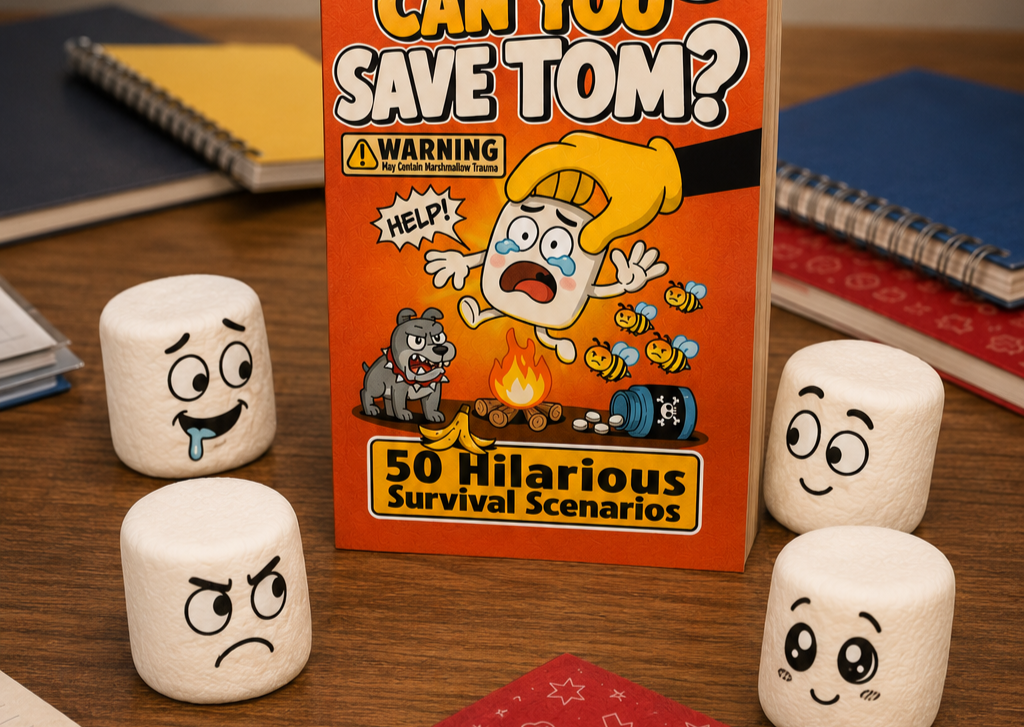
Every parent has bought the responsible book. The one with the calm cover and the sensible title that promised to teach first aid. And every parent knows exactly where that book is right now: untouched, spine uncracked, quietly judging you from the shelf.
The problem was never the information. It was the delivery. Children don’t resist learning safety — they resist being lectured about it. So Can You Save TOM? does something sneaky: it never once feels like a safety book. It feels like a game about a hopeless man who keeps eating, drinking, petting and zapping things he absolutely shouldn’t. The first aid goes down without anyone noticing they’ve swallowed it.
“The best safety lesson is the one a child doesn’t realise they’re having.”
— the entire design philosophy of the book, in one line
Why it actually gets read
The book is built around 50 interactive scenarios. Each one drops TOM into a fresh disaster, hands the reader a multiple-choice decision, and then reveals what would really happen with each option — the correct first-aid response alongside the gloriously terrible consequences of the wrong ones. It’s the same loop that makes choose-your-own-adventure books impossible to put down, except the prize for choosing well is a genuine life skill.
Around that core sit four features that quietly do the heavy lifting:
50 interactive scenarios
Decision-based stories that turn passive reading into active problem-solving. Kids choose, then find out if they saved TOM.
Silly drawing prompts
Activities like “draw TOM floating away on balloons” keep hands busy and cement the lesson through play.
QR codes to real resources
Scannable links lead to public educational videos from trusted sources — so curiosity points somewhere genuinely useful.
A scoring system
The TOM Survival Score Card lets readers total up their results at the end and see how they did. Instant replay value.
That scoring system is doing more than it looks. The moment a child can earn a score, re-reading stops being repetition and becomes a challenge — “I got 38 last time, I bet I can beat it.” Every replay is another quiet pass over the same safety rules, which is exactly what makes them stick.
Why it works in the classroom
The same qualities that make it a hit at the kitchen table make it a genuinely useful teaching resource. It’s an easy fit for a PSHE lesson, a wet-break activity, a circle-time discussion, or a calm-corner book. Because each scenario is self-contained, a teacher can pull out a single one in five minutes flat — no need to read the whole thing in order.
Discussion-ready: every scenario is a built-in “what would you do?” prompt for the whole class.
Differentiates easily: strong readers race ahead through the choices; others enjoy it read aloud as a group.
Cross-curricular: ties into PSHE, health education, and even creative writing through the drawing prompts.
Low-prep: open to any page, read the scenario, take a vote on the answer, reveal the outcome. Done.
Memorable: “the snake named Gary” sticks in a child’s head far longer than a worksheet ever will.
For teachers
Try running a scenario as a class vote: read the setup, have everyone pick A, B, C or D with their fingers, then reveal the outcome. The wrong answers spark the best discussions.
The reassuring part for grown-ups
It’s fair to ask whether a book this silly takes safety seriously. It does — the humour is the wrapper, never the lesson. The correct answers are real first-aid principles: keep a poisoned person still and call for help, ice a sprain, check for concussion after a head knock, back away from the wild animal. The jokes live in TOM’s catastrophic wrong choices, which is exactly where you want a child laughing, because that’s the behaviour the book is gently steering them away from.
And because the QR codes point to trusted educational videos rather than the open internet, a curious child who wants to know more has somewhere safe to go. It’s a book designed by someone who clearly understands that the goal isn’t to frighten kids into caution — it’s to make the right instinct feel obvious, and a little bit fun.
So if the responsible book on your shelf hasn’t moved in a year, the issue was never your child’s attention span. It was that nobody had thought to teach this stuff through a man who loses fights with treadmills. Now somebody has.
Want to get latest updates on new books?
SubscRibe to our mailing list below
© 2025. All rights reserved.