
Don't Fight Fire with Freshness 🦷
Windows open. Source removed. No toothpaste. The safety tip companion to Chapter 26 — kitchen smoke quick reference, smoke alarm facts, and the three things that never belong in a smoky kitchen.
7/13/20263 min read
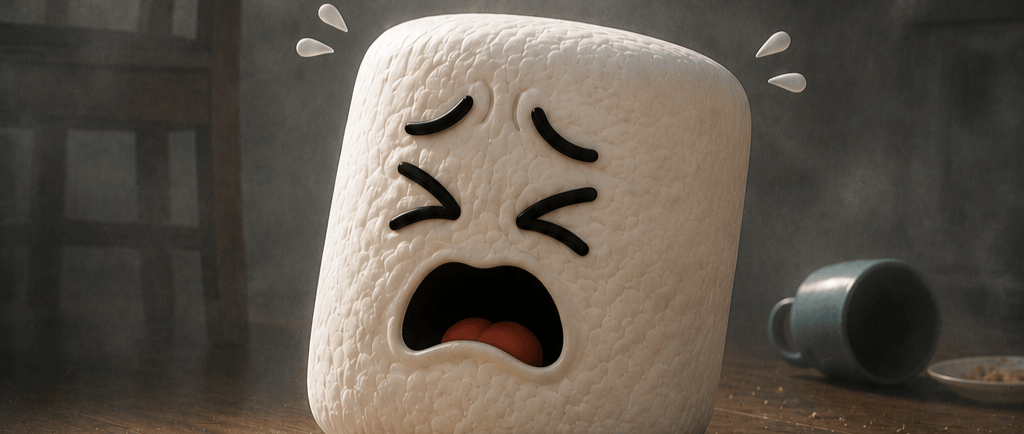
Yesterday TOM applied toothpaste to a smoke situation. Today is the practical companion — what to actually do when the kitchen fills with smoke, which three things should never be your first response, and why smoke alarms deserve more respect than they usually get.
Kitchen smoke is one of those everyday emergencies that most people have encountered and most people handle by instinct. The instinct is usually close to right. But "close to right" and "actually right" diverge in a few specific ways that are worth knowing clearly.
📖 From Chapter 26
"Don't fight fire with freshness." — TOM's tip, written from a kitchen that still smelled, inexplicably, of spearmint.
🪟
The Kitchen Smoke Response — In One Sentence
Open windows, remove or switch off the source, and let fresh air do the work. Everything else — toothpaste, perfume, candles — adds to the problem rather than solving it.
Subtraction, not addition
The three things that never belong in a smoky kitchen
🦷Toothpaste
Does not absorb smoke. Does not neutralise odour. Creates a new and confusing smell. Leaves the kitchen minty and still smoky.
🌸Perfume or air freshener
Masks smell temporarily without removing particles. Result: flaming flowers. The smoke alarm still activates. The underlying problem is unchanged.
🕯️A candle
Introduces an open flame to a smoke-filled space. Adds combustion products. Does not improve vibe. The candle joined the fire. Romantically catastrophic.
💡 The Principle Behind All Three
Smoke is a physical presence in the air — particles and gases that need to be physically removed. Fragrance, toothpaste, and candles are additions to the air, not subtractions from it. Only ventilation actually removes smoke. Open the windows first, always.
The kitchen smoke response — step by step
Open windows and external doors immediately
Cross-ventilation is fastest — windows on opposite sides of the kitchen if possible. Every second of delay is more smoke in the air and a higher chance the alarm activates. Windows first, everything else second.
Switch off or unplug the heat source
If it's safe to reach: turn off the toaster, hob, or grill. Unplug electrical appliances before touching them. Do not pour water on a toaster, a hob, or any electrical appliance — unplug first, let it cool, water stays away from electrics.
Use a tea towel or fan to help clear the smoke
Wave a tea towel near an open window to direct smoky air out. The kitchen extractor fan on its highest setting helps significantly. A portable fan pointed at an open window works well too.
If the smoke alarm activates — let it do its job, then reset it
Do not remove the battery to silence the alarm. Once the smoke has cleared, press the reset button. The alarm is doing exactly what it should. Silencing it permanently because it's inconvenient is how people miss real fires.
Do vs. don't — quick reference
✓ Do
Open windows immediately — cross-ventilation first
✗ Don't
Add toothpaste, perfume, or candles to the situation
✓ Do
Unplug the appliance, then let it cool before touching
✗ Don't
Pour water on any electrical appliance
✓ Do
Reset the smoke alarm once smoke has cleared
✗ Don't
Remove the battery to silence the alarm
✓ Do
Leave and call 999 if there are actual flames
✗ Don't
Call 999 for burned toast — that line is for real emergencies
Smoke alarm: the five-minute home check
Chapter 26 is a good prompt to check on the smoke alarm — the device that would tell you if burned toast became something more serious while you were dealing with it the wrong way.
🔔 Smoke Alarm Quick Check
✅Test it monthlyPress the test button for a few seconds. If it doesn't sound, the battery needs replacing — or the unit needs replacing if it's over 10 years old.
✅Check the positionSmoke alarms should be on the ceiling, ideally in the hallway and on each floor. Not in the kitchen (too many false alarms) — but close enough to detect kitchen fires quickly.
✅Never permanently silence itRemoving the battery to stop false alarms from cooking is one of the most common causes of fire deaths. Use a heat alarm in the kitchen instead — it triggers on temperature, not smoke, so it's not set off by toast.
✅Consider a heat alarm for the kitchenA heat alarm (rather than a smoke alarm) in the kitchen activates when the room temperature rises rapidly — it won't go off for burned toast, but it will go off for an actual fire. Worth the upgrade.
✅Know where the fire blanket isA fire blanket mounted visibly in the kitchen handles small contained fires (a burning pan, a tea towel that's caught) quickly and without water. If you don't have one, they cost under £10 and could prevent a 999 call.
🚨 Smoke vs. Fire — The Line That Matters
Burned toast smoke: ventilate, unplug, reset the alarm. Actual flames: leave immediately, close the door behind you, call 999 from outside. Don't go back in for anything. The door slows the spread of fire significantly — closing it behind you as you leave is one of the most effective things you can do. For a chip pan fire specifically: never use water, smother with a fire blanket or leave and call 999.
📚 The Book Behind the Blog
Want to get latest updates on new books?
SubscRibe to our mailing list below
© 2025. All rights reserved.