
Electrical Safety at Home: 4 Rules TOM Wishes He Knew
Yesterday TOM lost a fight with his earbuds. Today, the prevention — four simple habits that head off the vast majority of household shocks and electrical fires before they start.
6/15/20262 min read
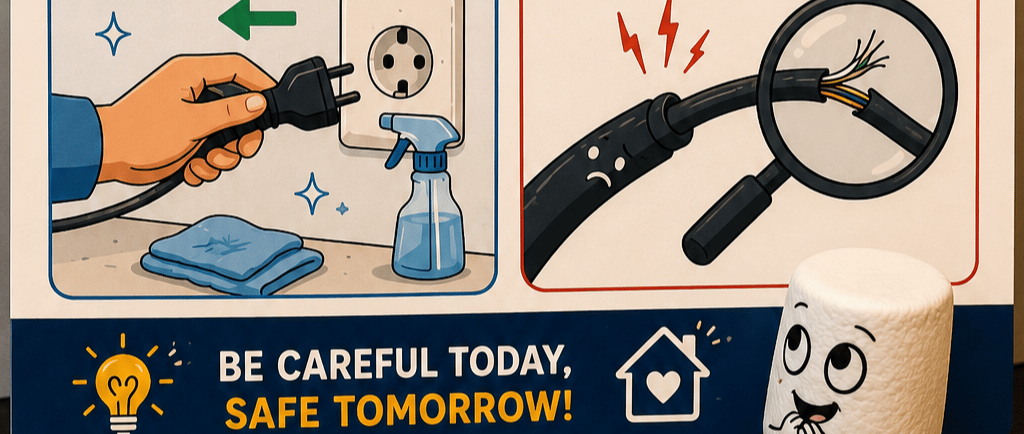
Most electrical accidents at home aren’t freak events — they’re the predictable result of a handful of small, repeated habits. The good news is that the reverse is also true: a few simple rules prevent the overwhelming majority of them. TOM, who has now personally tested the consequences, would like to share what he wishes he’d known.
These four are the ones worth drilling into the whole household, kids included. They’re easy to remember, easy to teach, and genuinely effective.
RULE 1 Never use electronics with wet hands
Water conducts electricity straight into you. Dry your hands before touching switches, plugs, chargers, or appliances — and keep devices away from sinks and baths.
RULE 2🔌Don’t overload sockets
Piling adaptors onto adaptors can overheat a socket and start a fire. Spread devices out, and avoid daisy-chaining extension leads.
RULE 3 🧹Unplug before cleaning
Switch off and unplug appliances before you wipe, wash, or poke around inside them — especially anything near water, like a toaster or kettle.
RULE 4 🧳Check for frayed cables
Damaged, frayed, or chewed cables expose live wires. Inspect leads now and then, and stop using (and replace) anything worn or cracked.
The thread running through all four
Electricity and water don’t mix, and damaged or overloaded kit is the usual culprit. Keep it dry, keep it spread out, and keep an eye on the cables.
, not for cooking ears.” If only he’d read his own book before bedtime.
Why these four, specifically
Each rule targets one of the common ways everyday electricity turns dangerous. Wet hands give the current an easy path into your body — the same reason bathrooms and kitchens are where so many shocks happen. Overloaded sockets are a leading cause of electrical fires, because too many devices drawing power through one outlet generates heat with nowhere to go. Cleaning a live appliance puts your hands near electrical parts while they’re still powered — a quick unplug removes the risk entirely. And frayed cables are the silent one: a worn lead can expose live wire that shocks on contact or sparks against something flammable.
None of these require any expertise — just the habit of noticing. Teaching kids the four as a little routine (“dry hands, don’t overload, unplug to clean, check the cable”) gives them a safety instinct that lasts a lifetime, and TOM a small measure of redemption.
UK quick-reference — a few extras worth knowing
Use the right plug fuse and don’t bypass it — it’s there to cut power if something goes wrong.
Keep sockets covered where toddlers roam, and never let children poke anything into an outlet.
Switch off and unplug chargers and appliances when not in use, especially overnight.
If a plug, socket, or cable feels hot, smells of burning, or sparks, stop using it and get it checked by a qualified electrician.
If a shock does happen
Remember yesterday’s rule: switch off the power before touching anyone who’s been shocked — never grab someone still in contact with a live source. Then check them and get help.
For a serious shock — chest pain, trouble breathing, confusion, or unconsciousness — call 999 straight away, and start CPR if they’re not breathing.
Four habits, one safer home. They cost nothing, take seconds, and prevent the kind of afternoon TOM had in Chapter 13. Print the four, pin the four, drill them with the kids — this is the rare safety list where doing the boring thing every day means never needing the emergency version. Tomorrow, a gentler note: it’s the weekend, and TOM is best enjoyed from the sofa.
Want to get latest updates on new books?
SubscRibe to our mailing list below
© 2025. All rights reserved.