Family Game Night Idea: Read Can You Save TOM? Together 🎲
Make choices as a family, score points, and find out once and for all who among you would actually keep TOM alive.
5/30/20263 min read
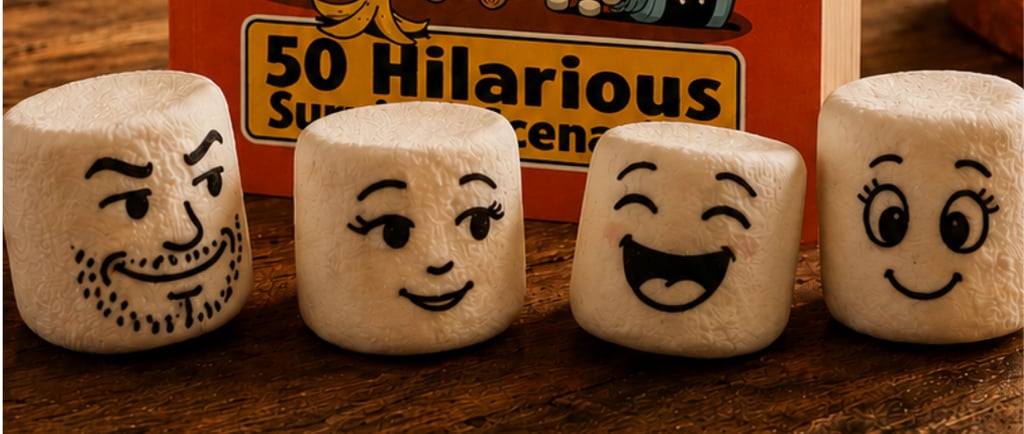
One week in. TOM has survived gummy vitamins, quoted himself memorably, and is gearing up for a very ill-advised encounter with a garden snake called Gary. Before we get to Gary — it's the weekend, and we have a suggestion for how to spend it.
Can You Save TOM? is designed as a read-alone book for ages 8 and up. But somewhere around chapter three of testing it, it became obvious that reading it as a group is something else entirely. The argument about whether option B or option C is correct for the gummy vitamin scenario lasted forty minutes in one household. (Option B is correct. There was no need for forty minutes.)
This weekend, gather whoever is around — kids, partners, grandparents, that friend who always claims to be good in a crisis — and find out who among you is truly a TOM-Saving Legend.
How to Play
🎲 The Rules — Simple Enough Even for TOM
1)Grab the book and something to keep score
A notepad, a whiteboard, a stack of post-it notes — anything works. One person per player, or play in teams if you have a bigger group.
2) Read each scenario out loud
One person reads the chapter — the scenario, the setup, and all four choices. Everyone else listens. No interrupting. No shouting out answers early. (This rule will be broken immediately.)
3) Everyone writes their answer secretly
Before the correct answer is revealed, everyone writes down A, B, C, or D. Hold them up at the same time. This is where the real chaos begins.
4)Reveal — and award the points
Read out the correct answer and the explanation. One point per correct answer. Bonus point if you can explain why the other options are wrong. The book tells you — so no cheating.
5)Check the riddle and drawing prompt too
Between scenarios, TOM throws in riddles and silly drawing challenges. These are optional but highly recommended — especially the drawing prompts, which reveal a great deal about how your family thinks under creative pressure.
The Scoring System
The book has its own official scoring tiers at the back — here's a preview of what you're aiming for, and what it means if you land somewhere lower down the table.
🏆 TOM Survival Score — Official Rankings
45–50
TOM-Saving Legend
You are calm, knowledgeable, and TOM owes you his life approximately fifty times over.
🏆 35–44
Reliable in a Crisis
You'd save TOM most of the time. The other times were probably the snake chapter. Don't worry about it.
🥇20–34
Well-Meaning Bystander
Your instincts are good. Your knowledge needs some work. TOM survived — just about.
🥈 10–19
Enthusiastically Unhelpful
You tried. TOM knows you tried. TOM is nevertheless in A&E. Read the book again.
🥉0–9
Basically TOM
You and TOM should not be left unsupervised together. Under any circumstances. Ever
Why This Works as a Family Activity
The reason Can You Save TOM? makes such a good game-night book — beyond the obvious fact that TOM is extremely funny — is that it generates genuine conversation. When half the table picks B and half picks D, the debate that follows is actually a first aid discussion. Without anyone intending it to be.
Children who argue confidently for the correct answer in a game context absorb that knowledge differently from children who read it off a safety poster. The competitive element, the laughter, the mild chaos of everyone shouting their reasoning at once — all of it makes the information stick. It's disguised education. The best kind.
🌿 Great for classrooms too
Teachers — this format works brilliantly as a classroom activity. Read a chapter aloud, have students write their answers on mini whiteboards or paper, reveal simultaneously. The discussion that follows writes itself. Several schools have already been using Can You Save TOM? for exactly this, and it consistently generates the most engaged first-aid conversations teachers have seen.
💡 One rule to make it better
After each correct answer is revealed, make everyone explain why the wrong answers are wrong — not just why the right answer is right. That's where the real learning happens. And it's also where the most entertaining arguments come from. Particularly around the milk option in Chapter 1.
Want to get latest updates on new books?
SubscRibe to our mailing list below
© 2025. All rights reserved.