Learning Safety Doesn't Have to Be Boring 🙌
That's exactly why Can You Save TOM? exists. Laugh out loud, make choices, earn points — and actually remember what you learned.
6/4/20262 min read
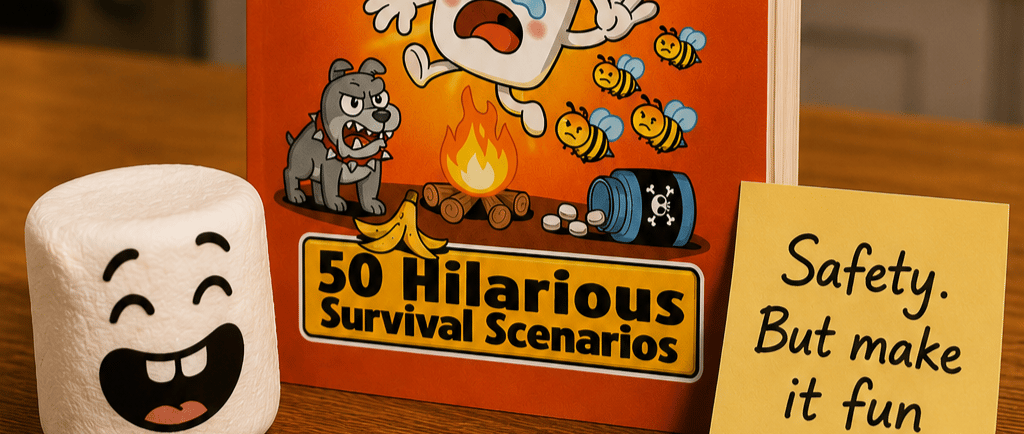
Two weeks in. Fourteen days of TOM, four chapters down, and somewhere along the way you've absorbed more first aid knowledge than any poster in a waiting room has ever managed to deliver. Today — the second weekend post — we step back from the scenarios and talk about why this approach works. And why the boring version doesn't.
Safety. But make it fun.
Safety education for children has a problem. Not a shortage-of-content problem — there is no shortage of content. There are worksheets, videos, assemblies, pamphlets, and posters. The problem is a retention problem. The information arrives and then, with remarkable efficiency, it leaves. Ask a child two weeks after a safety lesson what they learned. The answer is usually "something about… calling someone?"
Can You Save TOM? was built as a direct answer to that problem. Not a supplement to the existing approach — a different approach entirely.
What's Wrong With the Boring Version
😴 Conventional Safety Education
Passive — you receive information
Abstract — hypothetical scenarios
Adult delivers, child listens
Correct answer given upfront
No emotional engagement
Forgotten within days
🙌 Can You Save TOM?
Active — you make the decision
Concrete — TOM is right there
Child is the expert, TOM needs help
You work out the answer yourself
Laughter, surprise, competition
Remembered because it was fun
The research behind this isn't new. Emotionally engaged learners retain information at significantly higher rates than passive recipients. Material that makes you laugh, surprise you, or put you in the role of the decision-maker sticks in a way that a list of steps simply does not. The book doesn't ignore this research — it's built on it.
Why TOM Specifically Works
😂The laughter creates the memory
The moment you find TOM's logic funny is the moment you've understood exactly what went wrong. You can't laugh at a mistake without comprehending it.
🎯You make the call
Every chapter puts the decision in your hands. Information you've acted on is retained differently from information you've merely read. You saved TOM. You'll remember how.
❌Wrong answers are explained, not just marked
Understanding why milk doesn't neutralise vitamins is as valuable as knowing to call 111. The book explains both. That's the bit most safety education skips.
🏆The score makes it a game
A scoring system turns first aid into something you can win. Children who are competing to save TOM are not aware they are studying. This is by design.
🤝Best read together
The argument about which answer is correct is not a distraction — it is the learning. Two people disagreeing about option B versus option D are both reasoning through first aid out loud.
🔗Real resources, not summaries
QR codes link to genuine NHS and British Red Cross material. TOM gets you to the door. The real resources are waiting on the other side.
🙌 TOM on being educational
"I didn't set out to be a teaching resource. I set out to do things, and those things turned out to be instructive. I prefer to think of myself as an experiential learning environment rather than a cautionary tale. The distinction matters to me."
— TOM, Can You Save TOM? 50 Hilarious Survival Scenarios
Want to get latest updates on new books?
SubscRibe to our mailing list below
© 2025. All rights reserved.