
Snake in the Garden? Here's What to Actually Do 🌿
Gary has been and gone. Here are the three calm, clear things you do if a wild snake turns up — and exactly what not to do if it bites.
5/31/20264 min read
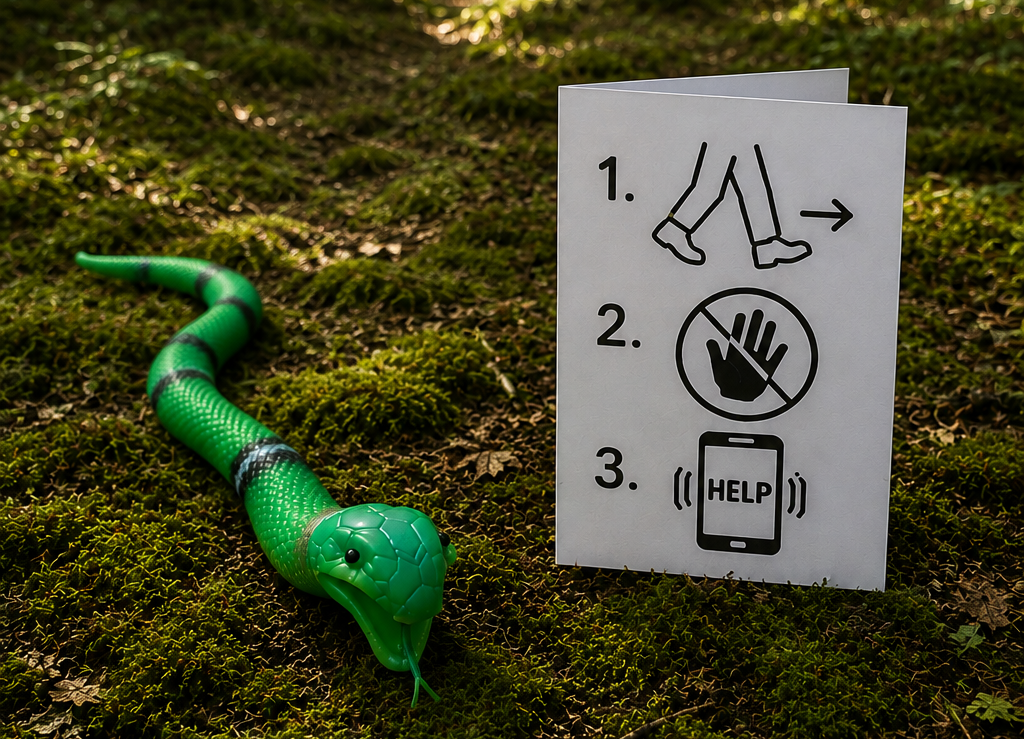
Yesterday TOM met Gary, trusted Gary's kind eyes, and nearly made a decision he couldn't take back. You made the right call — back away slowly, give Gary space, let Gary leave. Gary left. TOM kept all his fingers. Today we go slower and walk through the three things you actually do when a wild snake appears, and what happens if the encounter goes wrong before you can intervene.
This applies to you as much as it does to TOM. Adder encounters in UK gardens are more common than most people realise — particularly in areas bordering heathland, woodland, or rough grass. Knowing the three steps costs you nothing. Not knowing them can cost considerably more.
🐍 TOM, reflecting on Gary with the benefit of hindsight
"In retrospect, 'kind eyes' may not be a reliable diagnostic tool when assessing wild reptiles. I stand by the name Gary, however. Gary suits him."
— TOM, Can You Save TOM? 50 Hilarious Survival Scenarios
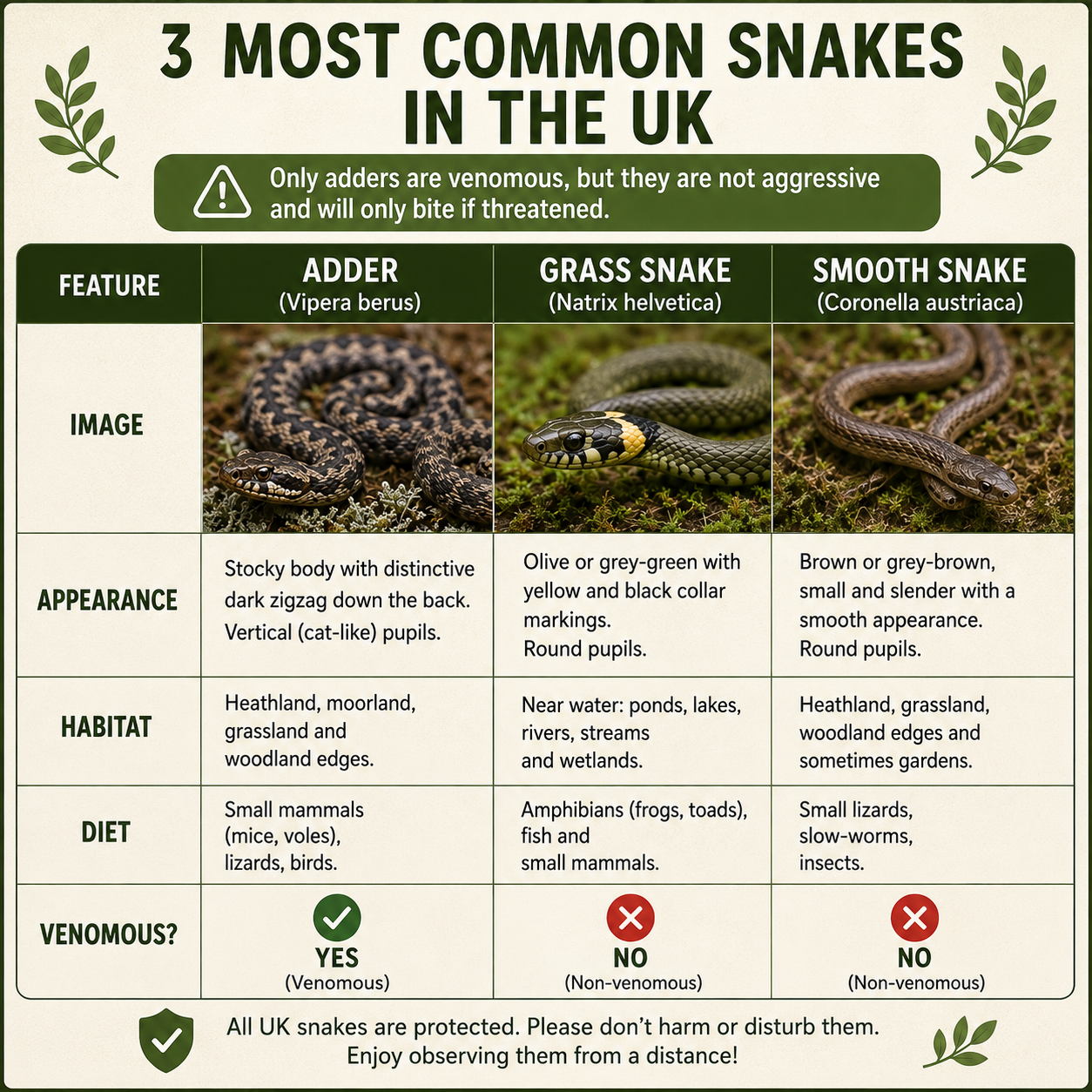
Know Your UK Snakes First
The UK has three native snake species. Only one is venomous. Knowing the difference doesn't change what you should do when you see one — the response is the same regardless — but it does put the risk in proportion. Most garden snake sightings are not adders. Most are not dangerous. All of them deserve to be left alone.
💡 The golden rule
Don't try to identify the species before you act. The correct response — back away, give space, do not touch — is identical for all three. Spending time trying to identify the snake is time spent closer to it than you need to be.
The Three Steps
1) Stop, stay calm, and back away slowly
The moment you spot a snake — or the moment TOM spots a snake and calls it Gary — stop moving. No sudden gestures, no shouting, no stamping the ground. Back away steadily, keeping the snake in sight, until you have several metres of clear distance.
Why this works: snakes detect vibration through the ground and respond to sudden movement as a threat. Slow, steady retreat signals that you are leaving, not attacking. The snake will almost always take the opportunity to move away.
2) Keep others — and pets — away from the area
Once you're at a safe distance, the job is to keep everyone else away until the snake has moved on. Children should be brought inside or kept well back. Dogs should be leashed immediately — dogs are far more commonly bitten by adders than people are, usually because they investigate with their noses.
How long to wait: given quiet and space, most snakes will move on within 15–30 minutes. If the snake is in a spot where it can't leave — trapped against a wall, in an enclosed space — contact the RSPCA (0300 1234 999) or a local wildlife rescue. Do not attempt to move it yourself.
3) If someone is bitten — call 999 immediately
Keep the person as calm and still as possible. Movement pumps venom through the lymphatic system faster. Remove any rings, watches, or tight clothing from the affected limb in case swelling develops. Note the time of the bite. Get to hospital as quickly as possible — antivenom is available and highly effective.
What not to do: do not cut the bite wound, suck out venom, apply ice or a tourniquet, or give the person aspirin or ibuprofen (these thin the blood). These are all things TOM would consider. None of them help.
What Happens If It Goes Wrong
Adder bites are genuinely rare — the UK sees fewer than one hundred a year — and fatal bites are extraordinarily uncommon, with only a handful of deaths recorded in living memory. But "rare" and "harmless" are not the same thing, and adder venom causes real symptoms that require real medical treatment.
Symptoms of adder envenomation typically include immediate pain and swelling at the bite site, followed by bruising that may spread significantly up the limb. Systemic symptoms — dizziness, nausea, swelling of the face or throat — can develop within hours and indicate a more serious reaction requiring urgent treatment.
🚨 Call 999 immediately if
The bite is on the face, neck, or torso. The person develops swelling beyond the immediate bite site that spreads rapidly. There are signs of anaphylaxis — swelling of the face or throat, difficulty breathing, dizziness, or collapse. Children and elderly people should be assessed at hospital regardless of initial symptom severity, as reactions can escalate quickly.
🌿 A note on wildlife law
All three UK native snake species are protected under the Wildlife and Countryside Act 1981. It is illegal to deliberately kill, injure, or take any native snake — including an adder. If you encounter one in your garden, the correct response is to leave it alone and let it leave. If it cannot leave safely, contact the RSPCA rather than attempting to handle or move it yourself.
📋 Quick Reference — Wild Snake Encounter (UK)
1️⃣Stop moving. Back away slowly. Keep the snake in sight until you have several metres of distance.
2️⃣Keep children and dogs away from the area. Give the snake quiet and space to leave.
3️⃣If trapped: call RSPCA 0300 1234 999. Do not attempt to move the snake yourself.
🚨If bitten: call 999. Keep the person still. Remove jewellery from the limb. Note the time.
❌Do NOT cut the wound, suck the venom, apply ice or a tourniquet, or give aspirin/ibuprofen.
⚖️All UK native snakes are protected by law. Do not kill or capture — observe and leave alone.
Want to get latest updates on new books?
SubscRibe to our mailing list below
© 2025. All rights reserved.