Swing Set Chaos: TOM Went Too High
TOM looked at a swing and thought, “What if… a backflip?” Midair, he reached the “bad idea” conclusion the rest of us reached instantly. Now he’s on the ground, holding his wrist, and gravity is undefeated.
6/16/20263 min read
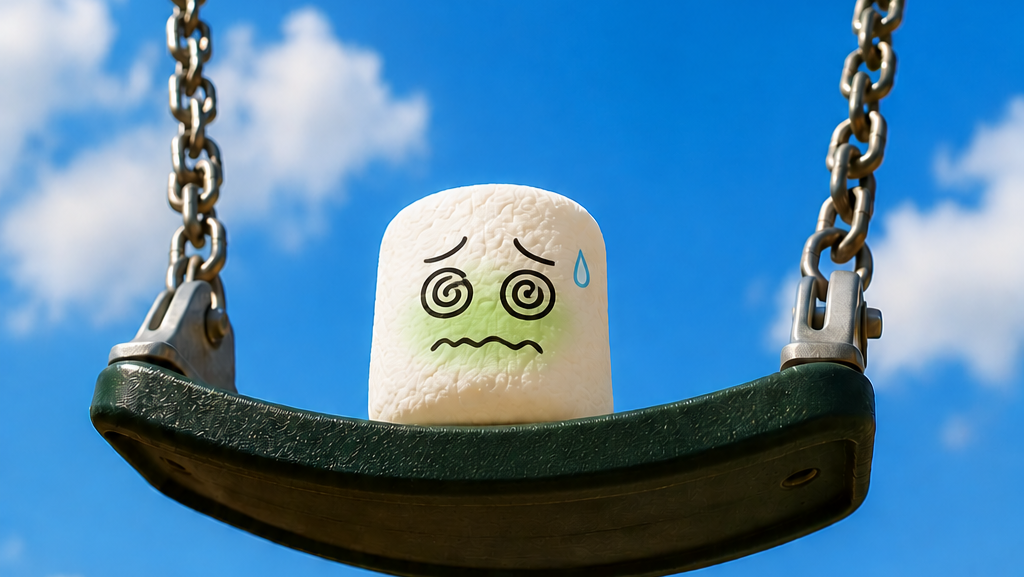

A swing has exactly one intended use, and “launchpad for a backflip” is not it. TOM, however, has never let a thing’s intended use limit his ambitions. He pumped his legs, he committed to the flip, and somewhere around the top of the arc he experienced the universal mid-air realisation: oh no. Welcome to Chapter 14, and a very common playground injury.
Falls are the bread and butter of playground first aid, and they often land on an outstretched hand — which is exactly how wrists and forearms get hurt. So while TOM groans on the ground composing his complaint to the swing, what do you actually do?
Straight from the book
“He tried to do a backflip on a swing. In midair, he had a sudden thought: ‘Bad idea.’ Now he’s groaning on the ground, holding his wrist.”
A)Ice, wrap, and check if he can move his fingers
B)Tell him to shake it off
C)Smack the ground and say “bad swing!”
D)Pour soda on it
The answer is A: ice it, support it, and check whether he can move his fingers. That finger check matters — swelling and a lack of movement can mean a break. If he can’t move them, or the pain and swelling are severe, it’s time to treat it as a possible fracture and get it looked at.
If you picked wrong…
B — He danced the pain off — right into a bush. “Shake it off” is not a fracture treatment.
C — You yelled at the swing. The swing did not care. The swing never cares.
D — Now he’s sticky and sore. Soda has never set a bone.
The one rule to remember
After a fall onto an arm or wrist: ice it, support it, and check finger movement. If they can’t move their fingers, or there’s bad swelling or an odd shape, treat it as a possible break and get it checked.
Sprain or break? How to tell
Here’s the honest answer: you often can’t be sure without an X-ray, and that’s fine — your job isn’t to diagnose, it’s to spot the signs that say “get this checked.” A fall onto an outstretched hand can cause anything from a mild sprain to a proper fracture, and the warning signs lean toward a break when there’s significant swelling, bruising, severe pain, an obvious deformity (a wrist that looks bent or out of shape), or an inability to move the fingers or use the hand.
While you’re arranging a trip to get it checked, the supportive care is the familiar stuff: ice through a cloth to bring swelling down, keep the arm still and supported (a makeshift sling or just resting it across the body helps), and don’t try to straighten or “click” anything back into place. That last one is the cardinal rule — never force an injured limb into shape.
Keep it still and supported. Don’t let them wave it around or keep using it. Support the arm against the body.
Check fingers. Can they wiggle them? Are they a normal colour and warm? Loss of movement, numbness, or a pale/blue look needs urgent attention.
Ice the swelling. A cloth-wrapped ice pack for short spells. Never ice directly on skin.
Get it checked. Severe pain, swelling, deformity, or any “can’t move it” means a trip to a minor injuries unit, urgent care, or A&E for an X-ray.
UK quick-reference — suspected broken arm or wrist
Go to A&E or an urgent treatment centre for severe pain, obvious deformity, a lot of swelling, or if they can’t move or use the hand.
Call 999 if the injury looks severe, the arm is at an odd angle, there’s bone visible or a wound over it, or the hand is numb, pale, or blue.
Support and don’t straighten: keep the limb still, raise/support it, and never try to realign it.
Don’t give food or drink if there’s any chance they’ll need an operation — check with the hospital.
When a playground fall is more than a sore wrist
Most falls bruise pride and limbs. But a fall that involves the head, neck, or back — or leaves someone unable to move, very drowsy, or unconscious — is a different situation, and moving them can do harm.
If you suspect a head, neck, or spinal injury, keep them still and call 999. We’ll cover exactly how to handle that — the do’s and don’ts of a playground fall — in tomorrow’s post.
TOM survives, the swing remains smug and unrepentant, and gravity extends its perfect winning streak. But the lesson is a genuinely common one: a fall onto a hand wants ice, support, and a finger check — not a brave shake-off or a can of soda. And if the fingers won’t move, that’s your cue for an X-ray. Tomorrow we zoom out to the bigger playground-fall picture: what to do, and crucially what not to do, when someone takes a serious tumble.
Want to get latest updates on new books?
SubscRibe to our mailing list below
© 2025. All rights reserved.