
The Freezer Challenge Is a Terrible Idea
TOM saw a YouTube challenge that involved sitting in a freezer “to test your cold resistance.” He is now shivering, pale, and speaking fluent penguin. Let’s talk about hypothermia — and why the obvious fix is the wrong one.
6/8/20263 min read
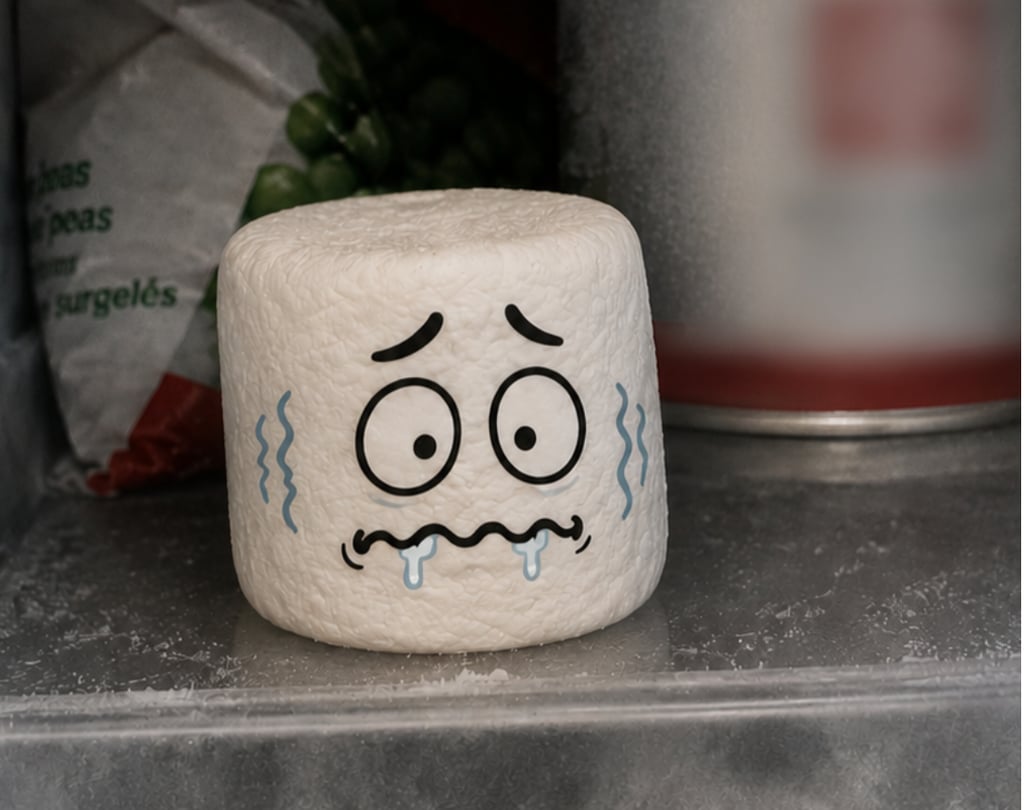

There is a particular genre of internet video that exists purely to be attempted by someone with TOM’s exact blend of curiosity and zero self-preservation instinct. Today’s entry: climbing into the chest freezer to “test your cold resistance.” Spoiler — the freezer wins. The freezer always wins.
This is Chapter 7, and beneath the image of a man slowly turning into a popsicle sits one of the more counterintuitive first-aid lessons in the whole book. Because when you finally haul a freezing person out, every instinct screams warm them up fast — and that instinct is exactly the one that can hurt them.
Straight from the book
“He’s now shivering, pale, and trying to speak but sounds like a penguin.”
Here’s the decision the book hands you:
A) Give him a hot bath immediately
B) Wrap him in warm blankets and give warm drinks
C) Let him sleep to conserve energy
D) Put him in the oven on low heat
The answer is B: warm him up slowly, with blankets and warm drinks. The reason is the heart of the whole lesson — sudden heat can shock a cold body. A scalding bath might feel like the fast route back to normal, but rushing the temperature back up can do real harm. Slow and steady is what actually works.
If you picked wrong…
A — Now TOM has hypothermia AND skin burns. You’ve added a second emergency on top of the first.
C — Sleeping while freezing isn’t smart — unless you’re a fish stick. As someone gets colder, sleep can slide into something far more dangerous.
D — Congratulations, he’s the world’s first human casserole. Ovens are not a warming method. Ever.
The one rule to remember
Warm a cold person gently and gradually — blankets and warm (not boiling) drinks. Never blast them with sudden heat like a hot bath, a radiator, or a heat lamp.
and friendly. What am I?”
Hypothermia: when the body gets too cold
Your body likes to run at a steady temperature — around 37°C (98.6°F). Hypothermia happens when it loses heat faster than it can make it, and the core temperature drops below that comfortable level. It doesn’t take an Arctic expedition: cold weather, wet clothes, or simply sitting still somewhere cold (looking at you, TOM) can all set it off.
The signs arrive in stages, and knowing the order matters. Early on: shivering, pale skin, and confusion. As it worsens: the shivering can actually stop, speech starts to slur, and the person may become drowsy or pass out. That last stage is a genuine emergency — counterintuitively, a hypothermia victim who has stopped shivering is often in more danger than one who’s still doing it.
Get them out of the cold. Move indoors or somewhere sheltered, and remove any wet clothing — wet fabric pulls heat away fast.
Wrap them up. Blankets, dry layers, something over the head. Insulate from the cold floor too.
Warm drinks if they’re awake. Warm, not boiling, and only if the person is alert enough to swallow safely. No alcohol.
Warm gradually, never suddenly. No hot baths, radiators, or heat lamps — gentle, all-over warming is the goal.
Get help if it’s serious. Drowsiness, slurred speech, stopped shivering, or loss of consciousness means call for emergency help right away.
UK quick-reference — cold emergencies
Call 999 if someone is very cold and becomes drowsy, confused, stops shivering, has slurred speech, or loses consciousness.
NHS 111 for advice on milder cases where you’re unsure.
Do: move them somewhere warm, remove wet clothes, wrap them in dry blankets, give warm (not hot) drinks if they’re alert.
Don’t: use hot baths, direct heat, or rub their skin — and don’t give alcohol to “warm them up.”
In a real emergency
Severe hypothermia is life-threatening and the signs can be subtle — especially once shivering stops. If a very cold person becomes drowsy, confused, or unresponsive, don’t wait for them to “warm up on their own.”
Call 999 straight away, keep warming them gently while you wait, and stay with them.
TOM, of course, survives to misjudge another day — but the lesson lands precisely because the wrong answer felt so right. “Just warm them up quickly” is the trap, and the human casserole is the punchline that makes a child remember not to fall into it. Slow warming, gentle blankets, a warm drink, and a phone call. Boring, calm, correct — the three words that describe almost every good answer in this book.
Want to get latest updates on new books?
SubscRibe to our mailing list below
© 2025. All rights reserved.