
The Inhaler Mix-Up 💨
TOM grabbed something that looked like his inhaler. It was not his inhaler. Chapter 20 is a reminder that reading labels matters — a lot, especially with medication.
6/30/20265 min read
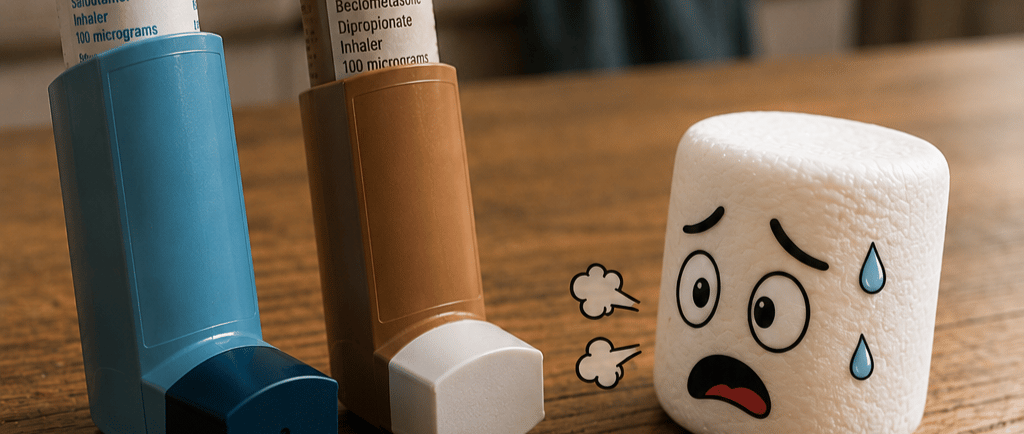
In a panic, things that look similar become things that are the same. A blue cylinder is a blue cylinder. A puffer is a puffer. TOM, mid-wheeze and reaching for relief, grabbed the nearest blue-ish inhaler-shaped object on the shelf and used it without checking. Chapter 20 is about what happens next — and why, even in an emergency, the label is worth the extra two seconds.
This chapter sits in slightly more serious territory than some of TOM's other escapades. Asthma attacks are genuinely time-sensitive, and getting the response right matters. But the lesson — check before you use, especially with medication — applies well beyond inhalers.
📖 Chapter 20 — The Scenario
TOM is having an asthma attack. He's wheezing, his chest feels tight, and he's starting to panic. He reaches for the shelf where his inhaler usually sits — but in his rush, he grabs the wrong one. It looks similar. It is not the same. He's about to use it without checking. What should you do?
A) Let him use whichever inhaler he's grabbed — any inhaler is better than noneNot all inhalers do the same job. Using the wrong one can fail to relieve the attack, or in some cases make breathing harder.
B) Stop him, check the label, and find his correct reliever inhalerA few seconds spent checking is worth it. Reliever inhalers (usually blue) are for emergency use — make sure it's the right one before he uses it.
C) Tell him to breathe into a paper bag insteadThis technique is for hyperventilation from anxiety, not asthma. Asthma involves narrowed airways, not over-breathing — a paper bag does nothing to help and may worsen oxygen levels.
D) Wait and see if it passes on its ownAsthma attacks can escalate quickly. Waiting without intervention risks the attack becoming severe before help can be sought.
Option B is correct. The instinct to "just use something, anything" during a breathing emergency is understandable — but inhalers aren't interchangeable. There are reliever inhalers (for immediate symptom relief, typically blue) and preventer inhalers (taken daily to reduce attacks, typically brown, red, or orange) — and using a preventer during an attack won't help, because it isn't designed to act quickly. Checking the label takes seconds and ensures the right medication reaches TOM's lungs.
💡 The Core Rule
During an asthma attack: use the reliever inhaler (usually blue), sit upright, and take slow steady breaths through the device. If there's no improvement after 10 puffs or symptoms worsen, call 999.
What happens with the wrong choice?
😮💨 Option A: Uses the Wrong InhalerThe preventer inhaler doesn't act quickly enough to relieve an attack. TOM's wheezing continues, his anxiety increases, and precious minutes are lost before the actual reliever is found. 0 points.
🛍️Option C: Paper Bag MethodBreathing into a bag during an asthma attack reduces the oxygen available — exactly the wrong direction when airways are already narrowed. TOM's symptoms get worse, not better. 0 points.
⏳ Option D: Wait and SeeThe attack escalates. What started as wheezing becomes a struggle to speak in full sentences — a sign of a severe attack requiring emergency care. Time lost here matters. 0 points.
Why inhaler colour and type actually matter
Asthma medication is generally split into two broad categories, and the colour-coding (while not universal across all manufacturers) is a useful general guide that most UK patients are taught to recognise.
🔵 Reliever Inhalers
Usually blue. Provide fast relief by relaxing the muscles around narrowed airways within minutes. This is the one used during an attack.
🟤 Preventer Inhalers
Often brown, orange, or red. Taken daily to reduce inflammation and prevent attacks over time. Not designed for fast relief during an emergency.
Confusing the two isn't a small error. A preventer inhaler used during an acute attack simply won't produce the rapid airway relaxation that's needed — which means the wheezing, tightness, and breathlessness continue while nothing improves. This is exactly the gap that Chapter 20 highlights: a few seconds spent confirming the inhaler is correct can be the difference between fast relief and a worsening attack.
The correct response during an asthma attack
Stay calm and help them sit uprightPanic makes breathing harder. Sitting upright (not lying down) makes it easier for the lungs to expand.
Find and confirm the reliever inhaler — usually blueCheck the label if there's any doubt. If a spacer device is normally used, use it — it helps more medication reach the lungs.
Take one puff every 30–60 seconds, up to 10 puffsThis is the standard guidance for an asthma attack in the UK. Encourage slow, steady breathing between puffs rather than rapid panicked breathing.
Call 999 if there's no improvement after 10 puffs, or symptoms worsenSigns of a severe attack include difficulty speaking in full sentences, lips turning blue, or extreme exhaustion. Don't wait to see if it gets better on its own.
Continue reliever puffs while waiting for the ambulanceRepeat the cycle of 10 puffs every 10 minutes if symptoms continue and help hasn't arrived yet.
🚫 Things That Will Make It Worse
Using the wrong inhaler without checking — preventers don't act fast enough for an attack
Paper bag breathing — that's for hyperventilation, not asthma, and reduces oxygen during an attack
Lying the person flat — upright positioning makes breathing easier; lying down makes it harder
Waiting to see if it passes — attacks can escalate quickly; early action matters
Skipping the spacer if one is normally used — it significantly improves how much medication reaches the lungs
🇬🇧 UK Context
Call 999 if there's no improvement after 10 puffs of reliever, if symptoms are severe, or if this is a first-ever attack
Asthma + Lung UK runs a free helpline (0300 222 5800) for non-emergency advice on managing asthma and inhaler use
Many UK schools and workplaces keep an "emergency salbutamol inhaler" for exactly this kind of situation — worth knowing if one is available nearby
If you're ever unsure whether an inhaler is the right one, check the printed label — reliever inhalers are clearly marked, usually containing salbutamol
The bigger lesson from Chapter 20
The wider point of this chapter isn't really about inhalers specifically — it's about the broader habit of checking before acting, even under pressure. Medication mix-ups happen surprisingly often, particularly in households where multiple people use similar-looking devices, or where medication is stored together in a drawer or bag without much organisation.
A genuinely useful habit, separate from TOM's chaos: keep reliever inhalers somewhere instantly identifiable, and make sure everyone in the household who might need to help knows exactly where it is and what it looks like. The few seconds it takes to confirm you have the right one are seconds well spent — they're not the seconds that cost you the emergency.
🚨 In a Real Emergency
If someone is having a severe asthma attack — unable to speak in full sentences, lips or fingertips turning blue, extreme exhaustion, or no improvement after 10 puffs of reliever — call 999 immediately. Keep them calm, seated upright, and continue reliever puffs every 10 minutes while you wait for help to arrive.
Want to get latest updates on new books?
SubscRibe to our mailing list below
© 2025. All rights reserved.