The Nailgun Mishap 🔩😬
TOM wanted to hang a photo. He used a nail gun. It bounced and nailed his shoe to the floor — through his toe. Chapter 25 covers impalement first aid, and why the instinct to pull is exactly wrong.
7/8/20265 min read
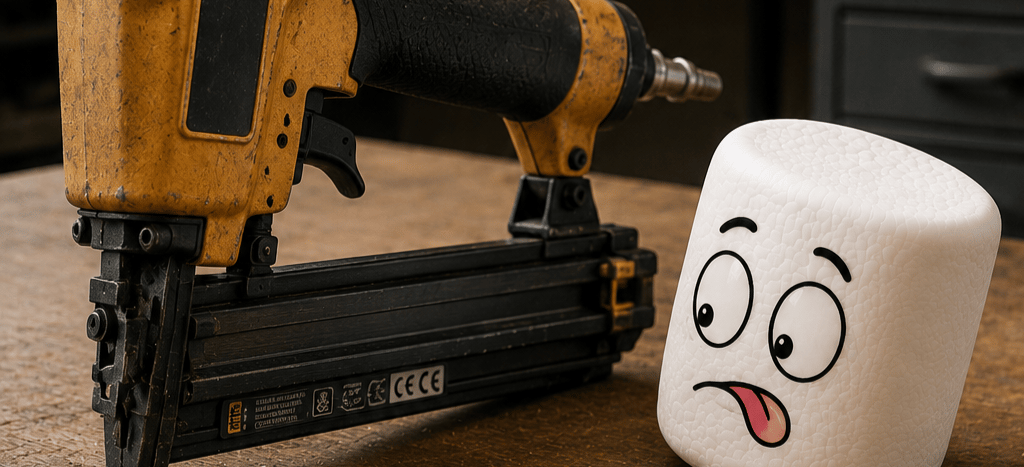
Hanging a picture is one of the most domestic tasks imaginable. A nail, a hammer, a wall — the whole thing takes three minutes and produces something nice to look at. TOM approached this task with the same instincts he brings to everything: more tool, more power, more committed. The nail gun was not strictly necessary. The bounce was not anticipated. The outcome was, in retrospect, foreseeable.
Chapter 25 is where Week 8's Wacky Experiments territory ends and something more serious begins. A nail through a toe is a genuine injury requiring a specific and counterintuitive response — and getting it wrong, as Option A demonstrates, makes things considerably worse.
📖 Chapter 25 — The Scenario
TOM wanted to hang a photo. He used a nail gun. The nail gun bounced — as nail guns do on hard surfaces when mishandled — and has nailed his shoe to the floor through his toe. TOM is now attached to the floor and absolutely cannot believe this has happened. What should you do?
A) Pull the nail out
Yanking it out caused screaming. And more bleeding. The nail was acting as a plug — removing it opens the wound fully. This is the worst thing you can do. 0 points.
B)Leave it in and get help immediately
Don't remove the nail. Keep TOM calm and still, call 999, and support the area around the injury without touching the nail. Removal is for the hospital, not the hallway.
C)Take a selfie with it
That selfie got flagged by TikTok. TOM is still nailed to the floor. The photo remains unhung. 0 points.
D) Use a magnet to pull it slowly
You tried a magnet. It got stuck to the fridge. The nail did not move. TOM remains attached to the floor, now also without access to the fridge. 0 points.
Option B is correct — and the reasoning matters, because the pull-it-out instinct is extremely strong in this situation. The nail feels like the problem. It looks like the problem. The solution feels like removing it. But an embedded nail is acting as a tamponade — it's physically plugging the wound and limiting blood loss. Removing it suddenly opens a puncture wound in a highly vascular area of the foot, causing a rapid increase in bleeding and potential further tissue damage as the object exits. This is a job for the emergency department, not a first responder in a hallway.
💡 The Core Rule — Impalement
Never remove an impaled object. Leave it in place, call 999 immediately, keep the person calm and as still as possible, and if you can, support the area around the object without touching or moving it. The hospital removes it — not you, not TOM, not a magnet.
"Tools + TOM = Trouble."
Why you never remove an impaled object
The rule against removing impaled objects is one of the most important — and most counterintuitive — principles in first aid. It applies to everything from a nail in a toe to a more serious impalement, and the reason is always the same: the object is doing useful work by being there.
When something penetrates tissue, it damages blood vessels on the way in. The object's presence applies direct pressure to those vessels, slowing or stopping the bleeding. Removing it suddenly decompresses the wound, allows blood to flow freely from the damaged vessels, and can introduce air into the wound cavity. The exit path may also cause additional tissue damage as the object is pulled back through. In serious impalements, removal can cause life-threatening haemorrhage within seconds.
For TOM's toe, the stakes are lower than a major impalement — but the principle is identical. The nail stays until a medical professional removes it under controlled conditions, with the ability to manage bleeding and assess the full extent of the injury.
What to actually do while waiting for help
Call 999 immediatelyA nail through a toe via a nail gun is a 999 call. Don't drive yourself. Don't wait to see how bad it is. Call.
Keep TOM calm and as still as possibleMovement risks moving the nail, which risks further damage and increased bleeding. Sitting or lying still is the goal. Panicking makes this harder — calm, reassuring voices help.
Do not touch, wiggle, or attempt to shorten the nailAny movement of the object risks further tissue damage. Do not attempt to cut or break the nail to make transport easier — this is also a job for the hospital.
Support the area around the wound — not the objectIf there's bleeding around the nail, you can apply gentle pressure to the surrounding tissue using a clean cloth — but do not press on the nail itself or the tissue directly above it.
Keep TOM warm and watch for shockSigns of shock include pale or grey skin, rapid shallow breathing, confusion, and feeling cold and clammy. Lay him down (carefully, without moving the foot), cover with a blanket, and keep talking to him.
🚫 Never Do These
Pull, yank, or wiggle the nail out — removes the tamponade, increases bleeding, causes additional damage
Cut or break the nail — the vibration causes movement in the wound; leave it intact
Apply pressure directly onto the embedded object — this pushes it deeper
Drive yourself to hospital with an impaled object — call 999, don't attempt to transport alone
Use a magnet — documented above. Does not work. Gets stuck to the fridge.
🇬🇧 UK Context
Call 999 for any nail gun injury — these are classified as penetrating trauma and require emergency assessment even if the injury appears contained
Nail gun injuries frequently involve more damage than is visible from the outside — the projectile can deflect internally, and X-ray is needed to confirm the full extent
Tetanus vaccination status will be checked at A&E — if TOM isn't up to date, he'll be offered a booster. Nail gun injuries carry infection risk.
Never use a nail gun on a hard surface without a workpiece — the bounce (called a "dry fire" or "double fire") is the primary cause of nail gun injuries
The broader lesson from Chapter 25
TOM's tip — Tools + TOM = Trouble — is funnier than the chapter strictly warrants, because Chapter 25 is the point in Week 8 where the tone shifts from wacky to genuinely important. A nail gun is a powerful tool that causes serious injuries in professional construction settings. In TOM's hands, attempting to hang a photo, it was a disaster waiting for a surface to bounce off.
The DIY lesson and the first aid lesson are equally worth keeping. On the DIY side: nail guns require training, appropriate safety equipment, and should never be used on surfaces that could cause a ricochet. A hammer and a nail would have been fine. On the first aid side: impaled objects stay in. Always. It is one of those rules that admits no exceptions.
🚨 In a Real Emergency
Any penetrating injury from a nail gun, power tool, or similar — call 999 immediately. Do not remove the object. Keep the person still, warm, and calm. If there is significant bleeding around the wound, apply gentle pressure to the surrounding tissue only. Watch for signs of shock. The hospital manages the removal — not you.
Want to get latest updates on new books?
SubscRibe to our mailing list below
© 2025. All rights reserved.