The Soap Bar Bet 🧼
TOM lost a bet. Now he's eating a bar of soap and his mouth is foaming like a rabid dog. Chapter 24 — what to actually do, and why shampoo is emphatically not an upgrade.
7/6/20264 min read
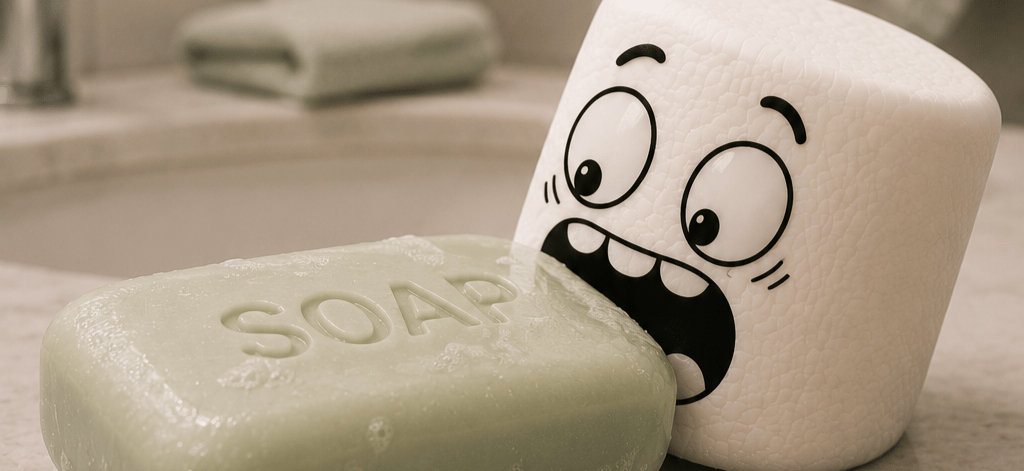
A bet was made. The terms were poorly considered. TOM, being TOM, honoured the bet with more commitment than was strictly necessary — biting into the bar of soap with the energy of someone who has decided that if they're going to do something inadvisable, they're going to do it properly. He is now foaming at the mouth, which looks significantly more alarming than it is, and which has done nothing to discourage the suggestion of adding shampoo.
Chapter 24 is the soap chapter. The good news is that a standard bar of hand soap is not particularly dangerous. The response, however, is not "wait and see" — and it is definitely not "film it."
📖 Chapter 24 — The Scenario
TOM lost a bet. Now he's eating a bar of soap. His mouth is foaming like a rabid dog — bubbly, spectacular, and deeply committed. He is also starting to look like he regrets this. What should you do?
A) Laugh and film it
Now you're famous. But banned from school. TOM's mouth is still full of soap and nobody is helping. 0 points.
B) Give him a drink of water and call Poison Control
Water to rinse and dilute. Poison Control (or NHS 111) for professional advice. Soap can cause nausea and GI upset — the severity depends on the amount and type. Don't guess.
C)Add shampoo for extra bubbles
Shampoo made the bubbles worse. TOM briefly disappeared behind a foam wall. This is not a solution. 0 points.
D) Slap him with a sponge
The sponge slapped back. Also, this does nothing for soap ingestion. TOM is not improved by a sponge encounter. 0 points.
Option B is correct for two reasons. First, water rinses soap from the mouth and dilutes anything already swallowed — reducing irritation to the throat and stomach lining. Second, calling Poison Control (in the UK, via NHS 111) gets TOM professional advice quickly, because the right response depends on factors that aren't visible from across the room: how much was consumed, what type of soap it was, and whether TOM is showing any symptoms beyond the spectacular foam display.
💡 The Core Rule
Soap ingestion: give water to rinse and dilute, do not induce vomiting, and call NHS 111 or Poison Control for advice. The severity depends on the amount eaten and the type of soap. A nibble of hand soap and a mouthful of industrial cleaner are very different situations — always get professional guidance rather than guessing.
"Not all dares are worth it. Especially the soapy ones."
Soap ingestion — what actually matters
The foaming is the dramatic part. The actual medical concern with soap ingestion is more prosaic: the surfactants in soap irritate the lining of the mouth, throat, and stomach, causing nausea, vomiting, and diarrhoea. In most cases involving a small amount of standard hand or bar soap, these effects are mild and self-limiting. But "most cases" requires knowing what was eaten, how much, and what type — which is exactly what NHS 111 or Poison Control will help establish.
The golden rule with any ingestion of a cleaning product: don't induce vomiting. This is a counterintuitive but important point — vomiting brings the irritant back through the throat and oesophagus, potentially causing more damage on the way back up. Water to dilute and professional advice to guide next steps is always the right sequence.
Not all soap is the same
🧼Standard bar soap / hand soap
Mild irritant. A small amount typically causes nausea and upset stomach. Unpleasant, recoverable. Still call NHS 111 for guidance.
Bubble bath / shampoo
Similar to bar soap for small quantities. More foam production (as TOM discovered). NHS 111 for anything beyond a taste.
🧴Dish soap / laundry liquid
More concentrated surfactants. Higher irritation potential. More likely to cause significant GI symptoms. NHS 111 immediately.
⚠️Industrial cleaners / detergents
Potentially caustic. Can cause serious burns to mouth, throat, oesophagus. Call 999. This is not a Chapter 24 situation.
🇬🇧 UK Context — Who to Call
NHS 111 for any soap or cleaning product ingestion — they'll assess the type and amount and advise whether home monitoring is sufficient or a trip to A&E is needed
999 / A&E for any industrial or caustic cleaner ingestion, or if symptoms include difficulty swallowing, severe throat pain, or breathing problems
The National Poisons Information Service operates through NHS 111 — they have detailed information on specific products and can give precise guidance
Do not induce vomiting for any soap or cleaning product — this is consistent guidance across all types
Keep the packaging — the NHS or Poison Control will want to know the exact product name and ingredients
The bigger lesson: dares have a response protocol too
Chapter 24 sits in Week 8's Wacky Experiments section, but it has a slightly sharper edge than the battery lick or the ice cream speedrun — because soap ingestion is something that genuinely happens, particularly with young children who don't need a bet to motivate them. The foaming is funny when it's TOM. It requires a calm, correct response regardless of how it started.
The "laugh and film it" option scores zero for a reason. Someone eating soap — however voluntarily and however spectacularly — needs water and a phone call, not an audience. Getting the practical response right first and the TikTok content later is the correct order of operations. (Not that we're recommending TikTok content about soap consumption. We are not.)
🚨 When to Go Straight to 999
If someone has swallowed an industrial cleaner, bleach, drain cleaner, or anything with a corrosive warning symbol — call 999 immediately. Do not induce vomiting. Do not give milk or food. Give small sips of water only if advised by the emergency services. These products cause burns, not just nausea, and require immediate medical attention. This is not a TOM situation. This is a serious emergency.
Want to get latest updates on new books?
SubscRibe to our mailing list below
© 2025. All rights reserved.