The Soda Explosion 🥤💥
TOM shook a 2-litre bottle of cola and opened it in his lap. He is drenched, sticky, and reporting emotional injuries. Chapter 21 is peak TOM.
7/2/20264 min read
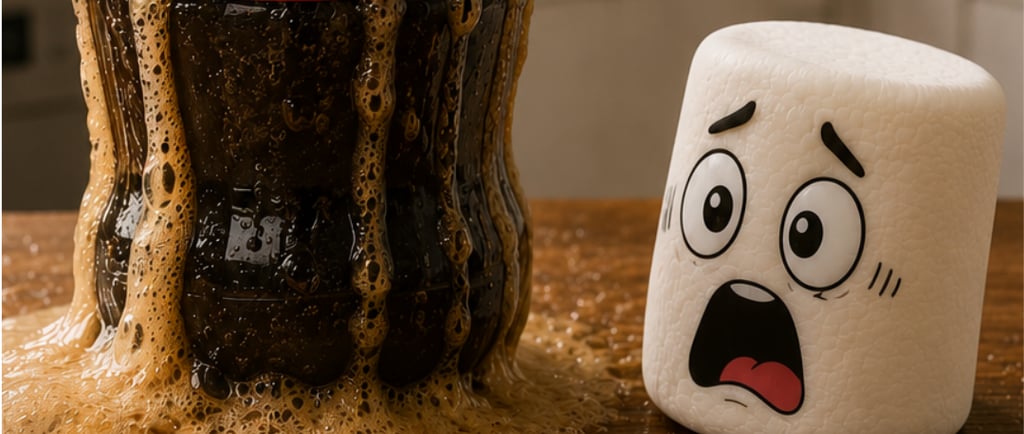
There are accidents, and then there are decisions. TOM picking up a 2-litre bottle of cola, shaking it thoroughly, and then opening it whilst it was sitting in his own lap sits somewhere in the Venn diagram between both. The physics were predictable. The result was comprehensive. TOM is now wet from the chest down and has described his condition, with some feeling, as "emotionally injured."
Welcome to Week 8 of Can You Save TOM? — Wacky Experiments. Chapter 21 is not a medical emergency. It is something arguably more delicate: a dignity emergency. And it turns out there is a correct response to those too.
📖 Chapter 21 — The Scenario
TOM shook up a 2-litre bottle of cola. Then he opened it. In his lap. He is now drenched, sticky, and sits very still with the expression of a man reconsidering several recent decisions. He says he is "emotionally injured." What should you do?
A
Wrap him in cling filmSticky and cling-wrapped? He looks like a burrito. This does not help with the cola or the emotional injuries. 0 points.
B
Wipe him off and reassure him gentlyIt's just soda. Clean him up, keep the laughter internal (for now), and let his dignity recover at its own pace.
✓ Correct
C
Hose him down outsideThe hose was too powerful. He flew. Also this does nothing for the emotional injuries and may constitute an escalation. 0 points.
D
Pour Mentos in for funMentos = chaos. Again. TOM does not need more chaos. TOM needs a towel and someone to pretend this didn't happen. 0 points.
Option B is correct — and the reasoning is almost entirely about TOM's emotional state rather than any physical first aid. This is a chapter about how we respond to someone who is embarrassed, not injured. The cola is harmless. The situation is recoverable. The correct response is calm, practical, and — crucially — not funny. Not out loud, anyway. Not yet.
💡 The Core Rule
When someone is embarrassed rather than hurt, the priority is dignity first. Clean up the practical problem quietly, avoid making the moment bigger than it needs to be, and let them decide when it's funny. (It will be funny. Just not yet.)
What if you picked the wrong answer?
🐛
Option A: Cling FilmSticky and cling-wrapped, TOM now looks like a burrito. The cola is sealed in against his clothes. His emotional injuries have worsened considerably. He will not forget this.
🚿
Option C: The HoseThe hose was too powerful. TOM flew. He is now wet, cold, further from dignity than he has ever been, and the emotional injury has become a physical one. 0 points.
🧨
Option D: MentosMentos + remaining cola = chaos. Again. TOM looked briefly interested before the second explosion occurred. The situation has objectively deteriorated. The emotional injury is now severe. 0 points.
The lesson Chapter 21 is actually teaching
On the surface, this is a chapter about fizzy drinks and the predictable consequences of shaking a 2-litre bottle before opening it in your own lap. But Chapter 21's real subject is something slightly different: how to respond helpfully when someone doesn't need first aid, they need composure.
Most of TOM's other disasters involve a genuine hazard — burns, bites, choking, chemical exposure. Chapter 21 involves none of these. The only thing hurt is TOM's dignity, and dignity is surprisingly easy to make worse with a poorly judged response. Laughter at the wrong moment. An escalating solution (the hose, the Mentos). An overcorrection that calls more attention to the situation than the situation deserves.
"It's just soda. But dignity takes longer to clean."
— Can You Save TOM?, Chapter 21
The wipe-and-reassure approach works because it treats the problem at the right scale. Cola on clothing is a minor inconvenience. The right response to a minor inconvenience is a minor, calm intervention — not an escalating series of solutions that each make things worse than the last. This is true in first aid generally: matching the scale of your response to the scale of the problem is a skill in itself.
The wider principle: not every situation is a medical emergency
One of the things Can You Save TOM? does across its 50 chapters is demonstrate a range of situations requiring different levels of response — from genuine emergencies requiring 999, to situations requiring NHS 111, to situations requiring first aid, to situations like Chapter 21 that require nothing more than a towel, a kind word, and the self-restraint not to laugh for at least five minutes.
Knowing which category something falls into is its own skill. Over-responding to a minor situation creates unnecessary anxiety and can sometimes make things worse. Under-responding to a serious one is dangerous. TOM has now demonstrated most of the serious categories. Chapter 21 is a palette cleanser — a reminder that sometimes the right answer is just: be calm, be kind, get a cloth.
📋 The Chapter 21 Checklist — Dignity Emergency Response
Step 1: Establish that the person is physically unharmed. (TOM is fine. It is just cola.)
Step 2: Address the practical problem first and quietly. Wipe. Dab. Offer dry clothes if available. No commentary required.
Step 3: Reassure gently. "It happens." "No one saw." "It's fine." These are the correct sentences. "Did you really not see that coming?" is not.
Step 4: Do not escalate. The hose is not a solution. The Mentos are not a solution. Cling film is not a solution. Less is more.
Step 5: Let them decide when it's funny. It will be funny. Quite soon, probably. But that's their call to make, not yours.
The broader lesson from Week 8
Chapter 21 opens Week 8 — Wacky Experiments — which is the section of Can You Save TOM? where the disasters are more absurd than dangerous. The battery-licking, the fizzy nose spray, the ice cream consumed at dangerous velocity. None of these are medical emergencies. All of them are TOM.
The common thread through Week 8 is curiosity without consequences — TOM approaching each situation with genuine interest in what happens next, and a notable absence of interest in what the answer probably is before he finds out. Chapter 21's cola explosion is the purest expression of this: TOM shook the bottle, felt it pressurising, and opened it anyway, in his own lap, to see.
The result was entirely predictable. TOM was, as ever, surprised.
📚 The Book Behind the Blog
Want to get latest updates on new books?
SubscRibe to our mailing list below
© 2025. All rights reserved.