The Sunscreen Slip-Up 🌞🥪
TOM wanted extra sun protection and used mayonnaise instead of sunscreen. He is now burned and smells like a sandwich. Chapter 28 covers sunburn first aid — and why kitchen condiments aren't skincare.
7/18/20264 min read
There is a moment in Chapter 28 where TOM's reasoning almost makes sense — mayonnaise is white, sunscreen is white, both go on skin before outdoor activities, both come in similar-sized containers. The gap in this logic is everything else about them. One contains UV filters specifically designed to absorb and reflect solar radiation. The other contains eggs, oil, and vinegar, and has an SPF of approximately zero. TOM is now crispy and smells like lunch.
Chapter 28 covers two things: what mayonnaise does and does not do in the sun, and what to actually do about sunburn once it has happened — which is to say, after TOM has had his very thorough outdoor experience.
📖 Chapter 28 — The Scenario
TOM wanted extra sun protection. The sunscreen was empty. He applied mayonnaise instead, reasoning that it was white and went on skin. He has now spent several hours in the sun and is burned, uncomfortable, and smells distinctly of a sandwich. What should you do?
A) Rub butter on the burn
Butter on a burn? Now he's crispy and greasy. Greasy things trap heat against the skin and make sunburn significantly worse. 0 points.
B)Gently cool the skin and apply aloe vera
Cool water to lower the skin temperature, aloe vera to soothe, rest in the shade. Greasy things trap heat — not helpful. This is the correct response.
C) Wrap him in tin foil
He's shiny, cooked, and looks like party food. Tin foil reflects heat back onto the skin and traps it in. This is the wrong direction entirely. 0 points.
D)Take a bite (just kidding)
No one's biting, TOM. You still smell like lunch. This option was included for completeness and scores zero, as expected. 0 points.
Option B is correct, and the logic runs through the whole chapter: sunburn is a heat injury to the skin, and the priority is to remove heat from the equation. Cool water lowers the skin temperature. Aloe vera — which has genuine anti-inflammatory and moisturising properties — soothes the damaged skin and helps with the uncomfortable tightness. What you're avoiding is anything that traps heat: butter, oil, creams with greasy bases, and tin foil. All of these hold heat against already-damaged skin and make the burn worse.
💡 The Core Rule
Sunburn: cool the skin with cool (not cold) water, apply aloe vera or an after-sun lotion, drink plenty of water, and stay out of the sun. Never apply butter, oil, mayonnaise, or anything greasy — these trap heat. If blistering is severe, or there's dizziness, nausea, or fever, seek medical advice.
"Kitchen condiments aren't skincare."
What to actually do about sunburn
Get out of the sun immediately
Shade or indoors. The damage is already done, and more UV exposure makes it worse. Remove TOM from the sun before doing anything else.
Cool the skin with cool (not cold) water
A cool shower or damp cloth applied to the burned area for 10–20 minutes. Not ice — the sudden cold can shock already-damaged skin. Cool is the goal: enough to bring the temperature down without causing further irritation.
Apply aloe vera gel or after-sun lotion
Aloe vera has genuine anti-inflammatory properties and helps with the tightness and discomfort. After-sun lotions work well too. Apply gently — don't rub. Avoid anything greasy: butter, oil, coconut oil, mayonnaise, standard moisturisers with heavy bases. Greasy products trap heat.
Drink plenty of water
Sunburn draws fluid to the surface of the skin and away from the rest of the body. Staying well hydrated helps the healing process and prevents dehydration, which can accompany significant sunburn.
Ibuprofen or paracetamol for pain and inflammation
Ibuprofen in particular helps with both the pain and the inflammatory response. Take as directed. Keep the burned area out of the sun for the rest of the day — and several days after, as healing skin is particularly vulnerable.
🚫 Never Put These on a Sunburn
Butter — traps heat, increases discomfort, delays healing. Crispy and greasy is not the goal.
Oil (coconut, olive, or otherwise) — same problem. Heat gets trapped. The burn gets worse.
Mayonnaise — the cause of this particular chapter. SPF 0, traps heat, smells of a sandwich.
Toothpaste — popular folk remedy, no evidence it helps, may irritate damaged skin further.
Ice directly on the skin — can cause ice burns on already-damaged skin. Cool water only.
Tin foil — reflects heat back onto the skin. TOM looked like party food. It did not help.
🔍 Sunscreen Detective — From Chapter 28
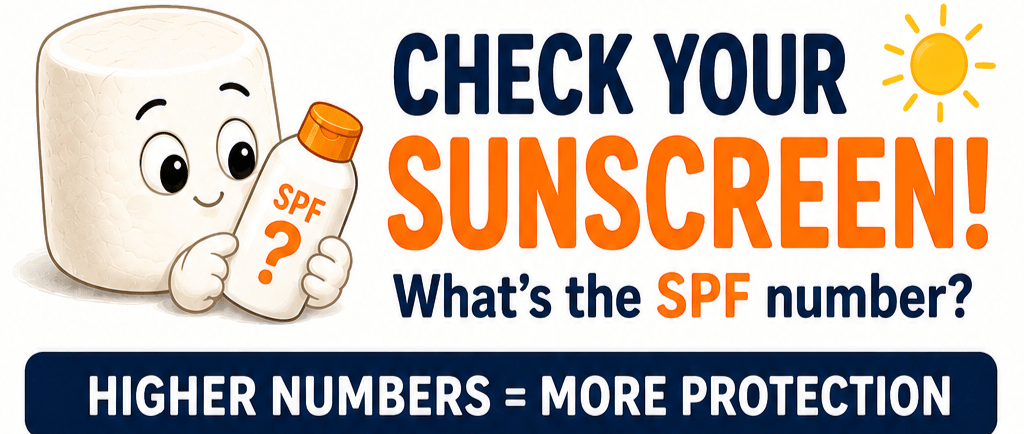
Check the sunscreen bottle at home. What's the SPF number?
Higher numbers = more protection. Here's what the numbers actually mean:
SPF 15
Minimum
Blocks ~93% of UVB rays. Fine for brief exposure with fair skin, but you'll need to reapply frequently.
SPF 30
Recommended
Blocks ~97% of UVB rays. The NHS minimum recommendation for most outdoor activities in the UK.
SPF 50
High protection
Blocks ~98% of UVB rays. Recommended for children, fair skin, and anywhere genuinely sunny. The extra 1% matters over a long day.
🇬🇧 UK Context — Sun Safety
The NHS recommends SPF 30 or above with at least 4-star UVA protection for everyday use in the UK
Sunscreen needs to be reapplied every 2 hours — and immediately after swimming, sweating, or towelling off. TOM did not reapply. He also had no SPF to reapply.
For severe sunburn with blistering, fever, chills, or dizziness — call NHS 111. These symptoms suggest sunstroke or significant skin damage requiring medical attention.
Seek shade between 11am–3pm during UK summer months when UV is strongest — this applies even on cloudy days, as UV penetrates cloud cover
Children's skin is more susceptible to UV damage — SPF 50 is the standard recommendation for under-18s
The broader lesson from Chapter 28
TOM's tip — kitchen condiments aren't skincare — is succinct to the point of poetry. Chapter 28 revisits the same principle as Chapter 27: the danger of substituting a food product for a medical or cosmetic one based on superficial similarities. White and spreadable is not the same as UV-protective. Liquid and in a bottle is not the same as formulated for nasal membranes.
The Sunscreen Detective activity from the book is genuinely worth doing — checking the SPF of the sunscreen currently sitting in your cupboard takes thirty seconds and might reveal it's last year's bottle that's been open all winter. Sunscreen degrades over time. It also needs to be the right SPF, applied in sufficient quantity, and reapplied consistently. None of these things are true of mayonnaise.
🚨 When to Seek Medical Help
Call NHS 111 if sunburn is accompanied by: large blisters, fever, chills, headache, dizziness or confusion, or nausea. These are signs of sunstroke or heatstroke alongside the skin burn — a more serious combination that needs professional assessment. Also seek help for any sunburn affecting a child under 1, or covering a very large area of skin.
Want to get latest updates on new books?
SubscRibe to our mailing list below
© 2025. All rights reserved.