The Treadmill of Doom Returns
TOM has now been defeated by a treadmill twice. Same machine. Same man. Zero lessons learned. A double-feature spotlight on the two chapters where TOM picks a fight with a moving belt — and loses, twice.
6/6/20264 min read
There are characters who learn from their mistakes. There are characters who at least learn from their second mistake. And then there is TOM, who has now been hospitalised by the same treadmill on two separate occasions and would, given a third chance, absolutely climb back on.
Most of our spotlights cover one chapter. This treadmill earned two. In Chapter 6, TOM meets it for the first time. In Chapter 33, having had ample time to reflect, he returns to settle the score — by running backwards. We’re covering both, because together they teach two genuinely useful and slightly different first-aid lessons: what to do with a twisted ankle, and how to spot a head injury.
Round 1· vs ·Chapter 6
The Treadmill of Doom
TOM decided to try his mum’s treadmill. Sensible enough — except he attempted it while eating crisps and texting, which is roughly as many hands as a treadmill requires you to not be using. The belt won. He’s now twisted like a pretzel at the bottom, clutching his ankle.
Straight from the book
“Now he’s twisted like a pretzel at the bottom, holding his ankle and asking, ‘Is this what yoga feels like?’”
Your options:
A) Pick him up and make him walk it off
B) Put frozen peas on the ankle, elevate it, and keep weight off
C) Wrap it in duct tape
D) Spin him in a chair to “reset his balance”
The answer is B. This looks like a sprain, and the classic first response is rest, ice, and elevation: cold helps bring the swelling down, and keeping the weight off stops you turning a sprain into something worse. Duct tape, for the record, is not a recognised medical tool, no matter how many problems it solves in the garage.
If you picked wrong…
A — Now it’s broken instead of sprained. Walking off an injury is how a small problem applies for a promotion.
C — Congratulations, he’s now boxed in. Duct tape solved nothing and created a TOM-shaped parcel.
D — Spinning a dizzy, injured person is a fast route to a second injury.
The takeaway
For a suspected sprain, think R.I.C.E. — Rest, Ice, Compression, Elevation. Cool it, raise it, stay off it, and get it checked if pain or swelling is severe.
Round 2· vs ·Chapter 33
The Treadmill Tantrum 2
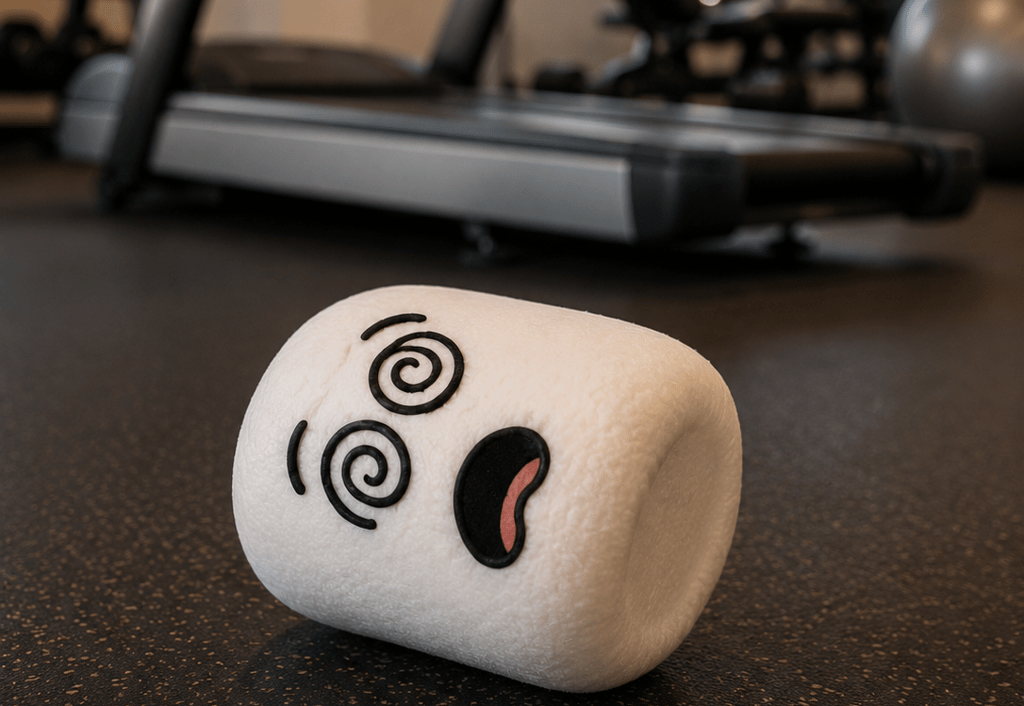
Twenty-seven chapters later, TOM returns. You might hope he’s come back wiser. He has not. This time he tries to run backwards on the treadmill, flies off the back, and slams into a closet. He’s now dizzy and cheerfully insisting that he has time-travelled.
Straight from the book
“Tom tried to run backwards on a treadmill. He flew off and slammed into a closet. Now he’s dizzy and says it’s time-travel.”
Your options:
A)Ice any bumps, check for signs of concussion
B)Laugh and throw shoes at him
C)Yell “Run forward, dummy!”
D)Ask what year he landed in
This time the answer is A. A fall plus a bang to the head plus dizziness and confusion — like genuinely believing you’ve time-travelled — can be the warning signs of a concussion. So you cool the bumps and you watch him carefully for the symptoms that mean it’s time to get medical help.
If you picked wrong…
B — Throwing shoes didn’t help. Now he’s bruised AND insulted.
C — You yelled; he fainted from dizziness and shame.
D — He now firmly believes it’s 1984. You have made the concussion’s case for it.
Treadmills: exercise machines, not amusement rides
Here’s the thread connecting both disasters. Treadmills are built for one thing: running or walking in place, facing forward, with your attention on the belt. They are not built for stunts. Running backwards, sideways, or generally messing about on one is one of the most common causes of gym injuries, and the falls can lead to sprains, fractures, or head injuries depending on which way TOM happens to be flung.
The two chapters split neatly into the two things that tend to go wrong: the lower-body injury (Round 1’s ankle) and the head injury (Round 2’s closet). The first you treat with rest and ice. The second you treat with vigilance — because a knock to the head that comes with dizziness or confusion is never something to just laugh off.
Stop and sit them down. No walking it off, no “just one more go.” Get them off the machine and still.
For an ankle or limb: rest it, ice it (a bag of frozen peas wrapped in a tea towel works), and raise it above heart level if you can.
For a head knock: check for dizziness, confusion, nausea, slurred speech, or unusual drowsiness. Watch them — symptoms can show up later, not just at the moment of impact.
Get help when it’s warranted. Severe pain or swelling, an obvious deformity, or any worrying head-injury sign means it’s time for a professional.
UK quick-reference — head injuries
Call 999 if someone is knocked out, can’t stay awake, is confused, has a fit, keeps vomiting, or has clear fluid from the nose or ears after a head injury.
NHS 111 for advice on a milder bump where you’re unsure whether it needs checking.
For sprains: R.I.C.E. for the first day or two; see a professional if you can’t bear weight, or pain and swelling are severe.
Watch the next 24–48 hours after any head knock — concussion symptoms can appear gradually.
In a real emergency
Most bumps and sprains are minor — but a head injury with confusion, repeated vomiting, drowsiness, a seizure, or loss of consciousness is not. Don’t wait to see if it passes.
Call 999 for any serious head injury, or NHS 111 if you’re unsure. When it comes to heads, the calm, cautious choice is always the right one.
So TOM ends the day having been beaten by the same appliance twice, which is genuinely impressive in a way nobody wants on their CV. But the joke does the teaching: kids remember “the man who ran backwards on a treadmill and thought he’d time-travelled” far longer than they’d remember a dry paragraph about concussion symptoms. That’s the whole trick of the book. Want to know whether TOM ever beats the treadmill? You’ll have to read it — though I think you already know the answer.
Want to get latest updates on new books?
SubscRibe to our mailing list below
© 2025. All rights reserved.