
TOM in the Kitchen Is a Health Hazard
He tried to cook spaghetti with no water, in a plastic container, in the oven. The kitchen now smells like melted regret, and TOM has a cough. Tag the friend in your life who “improvises” at the hob.
6/11/20262 min read
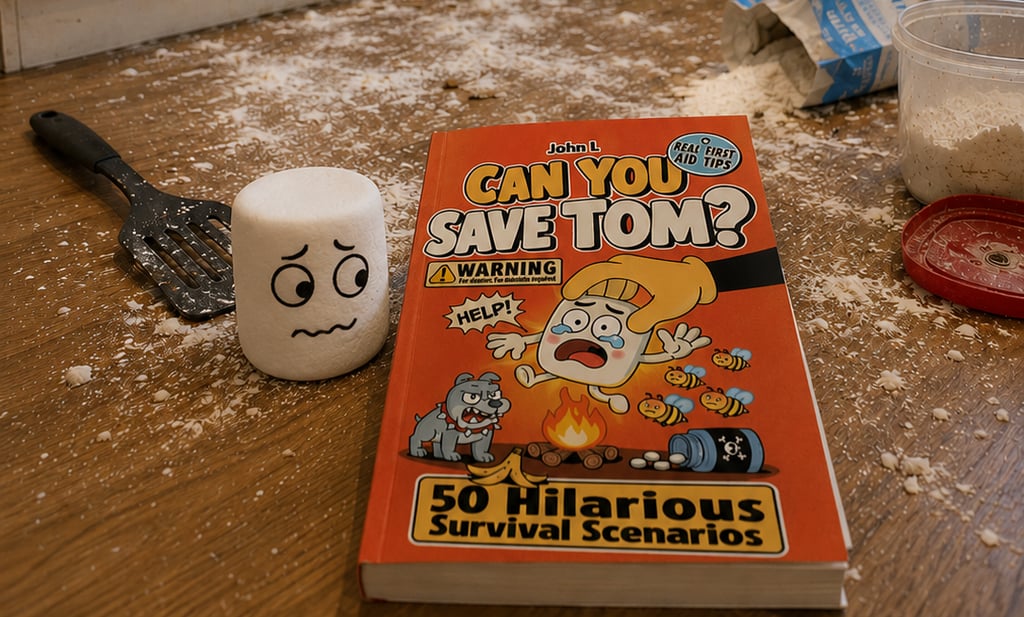
Everyone knows a TOM in the kitchen. The one who treats recipes as “suggestions,” who has opinions about whether instructions really apply to them, and who once microwaved something that was very clearly not microwave-safe. Chapter 10 is for them — and for everyone who’s had to fling the windows open after their experiment.
TOM’s latest culinary innovation: spaghetti, dry, in a plastic tub, in a hot oven. The result is exactly what you’d expect — a melted, smoking mess and a cough. And it turns out the funny smell is the actually-important part.
Straight from the book
“Tom tried to cook spaghetti. With no water. In a plastic container. In the oven. Now the kitchen smells like melted plastic, and Tom has a nasty cough.”
So, quickly — what do you do?
A)Open windows and get fresh air
B)Spray air freshener
C)Stay inside and watch cartoons
D)Smell the pot to see if it’s safe
The answer is A: get fresh air and ventilate. Burning plastic gives off genuinely toxic fumes — you don’t want to breathe them in, and you definitely don’t want to mask them with a cloud of air freshener on top.
If you picked wrong…
B — Now the house smells like floral melted plastic. The fumes are still there; they just have a perfume now.
C — You stayed inside watching cartoons… while inhaling fumes. Cosy, and quietly a terrible idea.
D — You both passed out. But hey — at least the pot’s clean.
The one rule to remember
If something’s burning or giving off fumes: get fresh air fast and leave the room. Don’t cover the smell, don’t lean in for a sniff — ventilate and get out.
Three ways to get fresh air, right now
Straight from TOM’s book — can you point to all of these in your own kitchen?
🪟Open a window
🚪Open a door
💨Extractor fan on
🚶Step outside
Burned plastic: why the smell is dangerous
That sharp, chemical reek isn’t just unpleasant — it’s a warning. When plastic burns or melts, it releases toxic fumes, and breathing them in can irritate your eyes, nose, and throat and bring on coughing, dizziness, or headaches. In bigger doses, the chemicals can start to affect the lungs and nervous system. So TOM’s cough is the early version of exactly the thing the fumes cause.
This is why the air-freshener answer is such a tempting trap. It feels like fixing the problem — the bad smell goes, so the danger must have gone too, right? But all you’ve done is add more chemicals to the air you’re breathing. The smell was never the problem; it was the messenger. The safe move is the simple one: get fresh air fast — open windows and doors — and leave the room until the air clears.
In a real emergency
If someone has breathed in fumes and has trouble breathing, chest pain, or a cough that won’t settle, get them into fresh air and seek medical help. For serious breathing difficulty, call 999.
And the best way to avoid the whole mess, per the book: only cook food the way it’s meant to be cooked. Ovens and plastic are not friends.
TOM survives, the spaghetti does not, and the plastic tub has gone to a better place. But the lesson is one worth sharing widely, because the “just spray something” instinct is so common: a strange burning smell is information, not an inconvenience. Air it out, clear out, and check on anyone who’s coughing. Now — who’s the TOM in your kitchen? You know the one. Send them this.
Want to get latest updates on new books?
SubscRibe to our mailing list below
© 2025. All rights reserved.