
TOM vs. A Tin Can. Spoiler: The Tin Can Won
TOM attempted to open a can of baked beans with a screwdriver, the way you might attempt to open a door with a banana. The screwdriver slipped. Now his hand is bleeding — a lot — and you’re up.
6/8/20263 min read
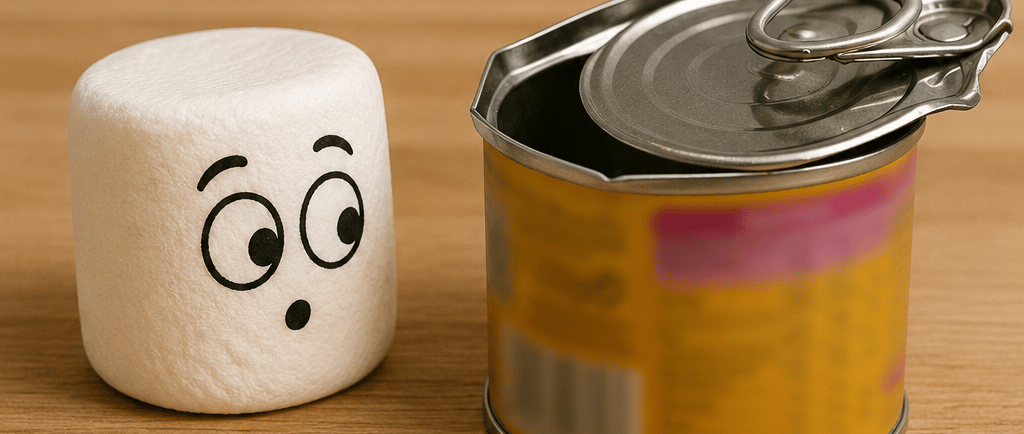
There is a correct tool for opening a tin can. It is called a can opener. It has one job, it is good at that job, and it lives in roughly every kitchen drawer on Earth. TOM, surveying these facts, reached instead for a screwdriver — and so we arrive at Chapter 8, and a lesson about bleeding that every single household will eventually need.
Because here’s the thing: the freezer challenge and the mystery drink are dramatic, but a cut from a sharp edge is the disaster you’ll actually meet. Kitchens are full of tins, knives, and lids. Knowing the three calm moves for a bleeding cut is genuinely one of the most useful things in the whole book.
Straight from the book
“Tom tried opening a can of baked beans with a screwdriver. It slipped. Now his hand is bleeding. A lot.”
Here’s your decision:
ARinse, apply pressure with a clean cloth, and raise the hand
BWrap it in foil and pray
CPour salt in it “to clean it”
DPanic loudly
The answer is A: rinse, pressure, elevate. Clean the wound, press firmly to stop the bleeding, and lift the hand up. That’s the whole rescue — three moves, no drama. Salt and foil, as the book dryly notes, are a recipe for pain, not healing.
If you picked wrong…
B — Now his hand is shiny… and still bleeding. Foil is not a bandage and never has been.
C — He screamed. You cried. It was weird. Salt in an open wound is exactly as bad as it sounds.
D — Panicking loudly solved nothing. Except scaring the dog.
The one rule to remember
For a bleeding cut: rinse it, press firmly with something clean, and raise it up. Pressure is what stops bleeding — not kitchen condiments, and definitely not foil.
TOM’s Terrible Joke
“Life hack: use a can opener…”
…not a what?
Wounds: stop the bleeding, save the day
The science here is reassuringly simple, and it’s the same for a screwdriver mishap as for a scraped knee. Cuts and scrapes happen. When one is deep or won’t stop bleeding, you act fast and in order: rinse the wound gently with clean water, then press down firmly with a clean cloth or bandage to stop the bleeding. If the cut is on an arm or leg, raising it above heart level helps slow the blood flow while the pressure does its work.
The “what not to do” list is where TOM specialises. Don’t pour random stuff into a wound — salt, butter, toothpaste, ketchup — because all you’re adding is pain and germs. Foil isn’t a bandage. And panic, despite feeling productive, has never once helped a single injury.
Rinse. Hold the cut under clean running water to flush out dirt and debris.
Press. Put a clean cloth, gauze, or bandage over it and press firmly. Keep the pressure on — don’t keep lifting to peek.
Raise. If it’s on an arm or leg, lift it up to help slow the bleeding.
Cover. Once bleeding slows, cover it with a clean plaster or dressing to keep it protected.
Then your body takes over, and it’s genuinely brilliant at this: platelets rush in to form a clot, which dries into a scab — a little shield over the repair work. White blood cells turn up to fight germs and tidy the area (which is why it may look a bit red or puffy), and then collagen “threads” rebuild the skin underneath. The scab is doing a job; picking it off just interrupts the build.
UK quick-reference — when a cut needs more than a plaster
Get medical help if the cut is large, gaping, or won’t stop bleeding after about 10 minutes of firm, steady pressure.
Also seek help if it’s very dirty, has something embedded in it, was caused by a dirty or rusty object, or is from an animal or human bite.
Call 999 for severe bleeding that won’t stop, spurting blood, or if the person becomes pale, cold, or faint.
Don’t: pour salt, butter, toothpaste, or anything else into a wound — and don’t remove a large embedded object; press around it instead.
In a real emergency
Most cuts settle with rinse-press-raise. But bleeding that won’t stop with firm pressure, blood that’s spurting, or someone going pale and faint is serious.
Keep pressing on the wound, raise it if you can, and call 999. Don’t stop applying pressure while you wait for help.
TOM survives, the beans go uneaten, and somewhere a can opener weeps quietly in a drawer. But the lesson is one of the most practical in the book: a bleeding cut isn’t a moment for improvisation or panic, it’s a moment for three calm, ordered steps. Rinse, press, raise. Tomorrow we’ll break that down even further into a save-it-to-your-phone three-step guide — because this is the one you’ll reach for most.
Want to get latest updates on new books?
SubscRibe to our mailing list below
© 2025. All rights reserved.